When Travel Reveals the Hidden Costs of Your Carry-On Setup
A carry-on’s strengths and weaknesses emerge with repeated access; isolating quick-access items reduces delays and eases airport transitions.
It’s strange how a bag that feels sharp and ready at home can become a source of tension by the end of a travel day. On my kitchen floor, I’d lined up the pouches, zipped everything tight, and given each charger and document its assigned spot. It looked finished, efficient—a version of order you hope will last. But after a few airport transitions, that calm started to unravel.
Somewhere between check-in and boarding, the friction points show up. A charger slides behind a toiletry bag, a document sleeve gets buried under the wrong organizer. Interruptions gather quietly: stopping to search a front pocket for the third time, shifting pouches before slipping into a narrow seat. Each cycle adds a few new pauses. The setup that looked crisp in the morning feels heavier with every repeat.
Where the Flow Breaks
You notice it after a few transitions. The neat structure starts costing you time instead of saving it.
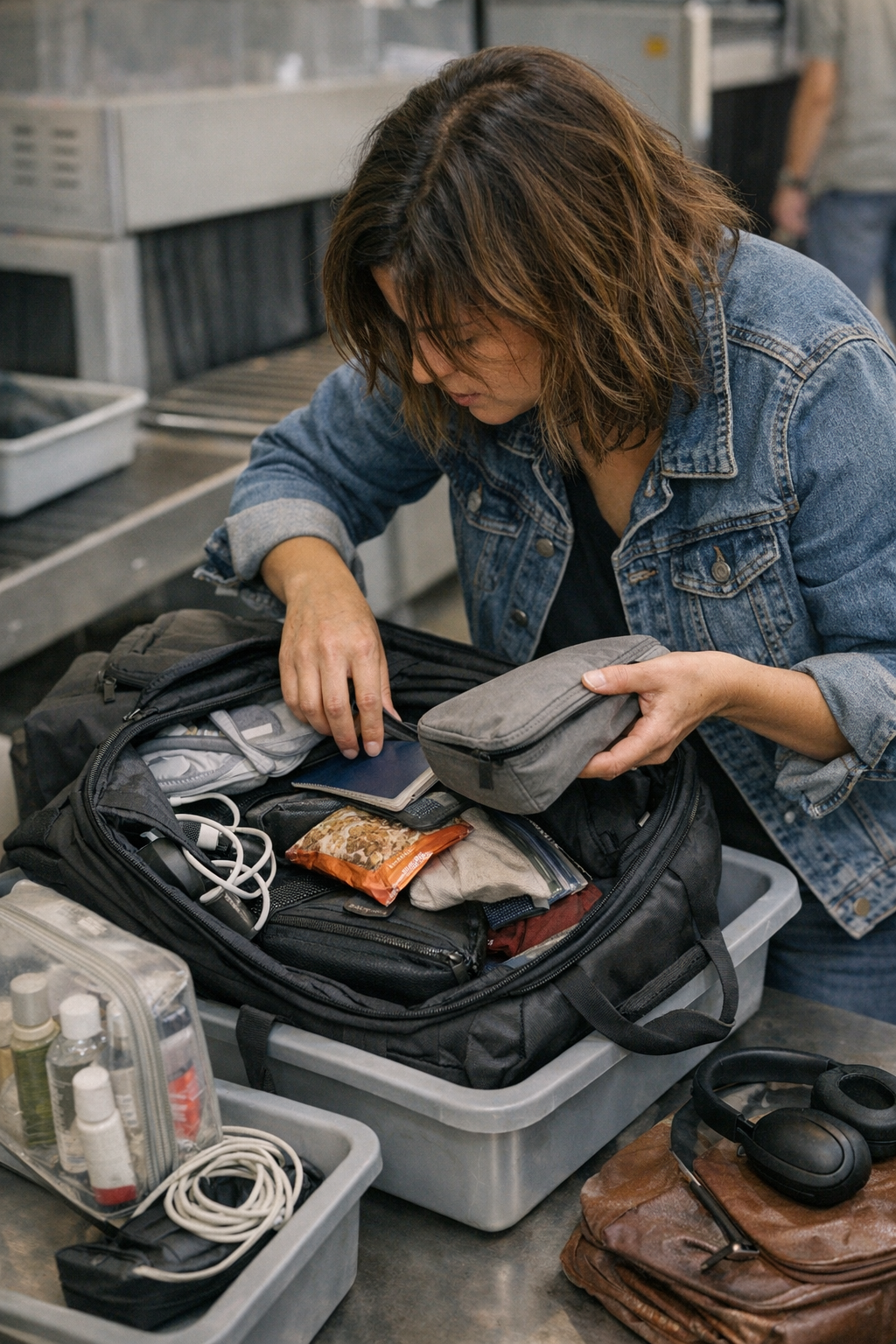
Getting your passport means unzipping two compartments, moving a pouch, then hunting through a layered pocket. Liquids and tech cables leave the bag together at the security tray—until you have to dig separately, and everything gets repacked out of order. It isn’t chaos, just a steady pressure that turns small tasks into repeat performances.
That steady pressure keeps coming back: a setup that once looked perfectly controlled now sets up little loops of delay.
The Illusion of Neatness
At first, everything stayed stacked, every cable was in a neat sleeve. But a neat line-up doesn’t always travel well.
The lesson repeated itself: if a daily-use item gets buried for the sake of appearance, you end up digging through non-essentials just to grab it. On a routine flight to Frankfurt, tray scanning behind me, suitcase open, earbuds wedged under snacks, passport hidden next to a charger pouch—I found myself right back at square one, resettling everything just to move forward.
Appearances offer less comfort than expected. Flow matters more than finish.
When Small Changes Matter Most
One change made the difference: keeping all fast-access items—passport, headphones, boarding pass—together in a single outer pocket. Not everything, just what always needs to be retrieved in one quick move. In-flight things landed in one pouch, separate from the rest. I stopped inventing new sections and followed what the bag already offered.
The feeling changed. Airport pressure points shrank, pauses eased. Single-move retrieval replaced the shuffle. Little frictions faded before they could accumulate.
It wasn’t about perfect order—just cutting out the extra steps that drained the most energy, over and over. In transit, the smallest change can bring the biggest relief.
There’s a quiet difference between a bag that looks prepared and one that actually stays easy to live with. When you keep moving, you start craving that—less for appearance, more for the breathing room it gives on the go.
For anyone who recognizes the subtle drag, the actual setups can be seen here: http://www.carryonsupply.myshopify.com