When Travel Routines Wear You and Your Pet Down
Repeated-use friction in pet travel setups isn’t missing gear but slow access and overlap that worsen each stop, hindering resets and calm.
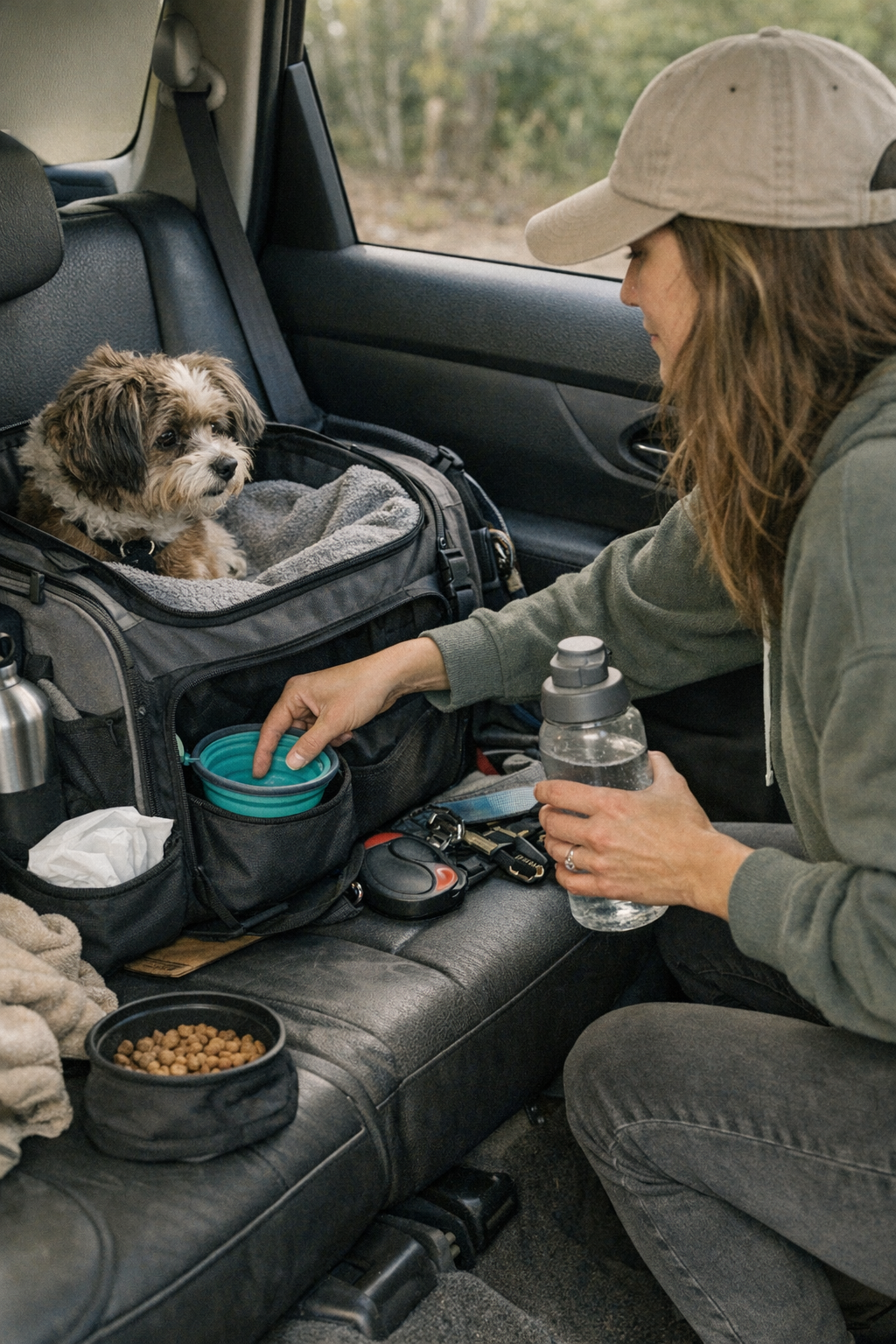
When your pet travel setup isn’t quite right, the first sign usually isn’t a forgotten leash or a lost pouch. It’s the subtle slowdown—the awkward reach, the bag you have to set down again to fish out a single wipe. Your pet pulls forward while you sort through overlapping items: bowls jammed beneath the comfort blanket, water wedged behind snacks, cleanup supplies nested a layer too deep. After a few stops, that easy, on-the-go flow you expected feels gone. The setup looks ready, but it doesn’t keep up with the routine you actually live.
When Structure Is Just the First Layer
At first, your travel bag seems perfect—compartments everywhere, cute dividers, everything zipped up neat. But that’s rarely the real test. Only after repeating the same motions—car to curb, seat-side to sidewalk, again and again—does the friction add up.
A wipe that seemed handy at first ends up trapped under a snack pouch. The harness, meant to slide straight out, hooks around the edge of a bowl. Meanwhile, your pet grows restless during these pauses. Most of the hassle isn’t about forgetting anything. It’s about access slowing to a crawl, each “organized” pocket becoming a small obstacle right when you thought you’d streamlined the process.
Routine Is the Real Test
By the third stop, the choreography starts slipping. After the park, wipes buried in a side pocket forced me to unzip, readjust, then juggle everything while shutting the car door with my elbow. By the next errand, I was shifting items to free the blanket or retucking water bottles blocking the exit.
These aren’t dramatic delays—just small, repeated reshuffles that add up in seconds and low-key frustration. The trip feels longer because the setup resists the actual rhythm of getting moving again.
Changing by Action, Not by Add-On
Eventually, I realized it wasn’t about adding more pouches. Letting frequently used items stay at the ready—wipes and water in a seat-side pocket, the comfort blanket folded loose instead of clipped—made returns to the car less strained. It wasn’t tidier, but it moved better. That difference showed up most when everyone needed to get going quickly.
Now, I watch for one-spot, one-hand access as my main signal the setup works. The rest sorts itself out as we move.
Sometimes, the smallest shifts let the whole trip breathe easier. You can find more about this kind of pet-travel setup at PawGoTravel.



