When Travel Shopping Turns Your Bag Into a Mess
Carry-on bags lose organization after shopping unless new items are kept separate, using a dedicated pouch for quick access and less delay.
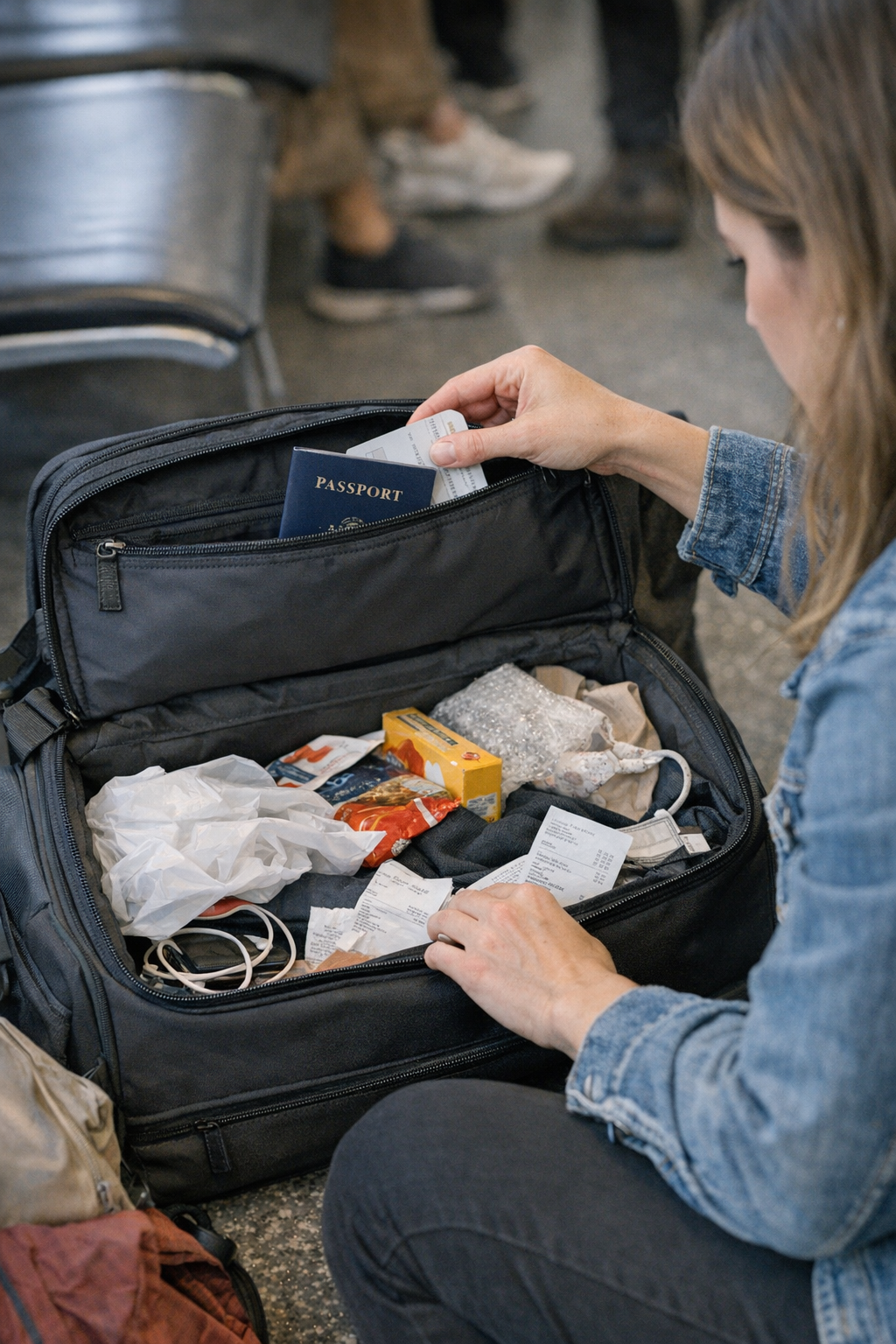
It sneaks up during a layover. You stop for a snack, maybe a local magazine—just something small to wedge beside the neat stack you packed at home. Suddenly the way your carry-on was organized feels less certain. Shop bags, crumpled receipts, half-open snacks—they all end up wherever there's extra room. What looked tidy at departure quietly begins to tangle with every small addition along the way.
Looking back, the pattern was always the same. The setup felt controlled in the hotel room, every item rolled or placed just so. But that sense of order started fading between security and the boarding line. The minute I slipped a new purchase into the bag, something shifted. Quick-access essentials lost their spots. Documents slid under snack pouches, headphones got trapped by loose receipts—all forcing an extra search at the least convenient moments.
You really notice the problem after a few transitions. Bags with a single large compartment leave you nowhere to sort the unexpected. Add anything new, and every retrieval slows down—two hands digging, zippers snagging on plastic, something always shifted out of view. The first time I tried a carry-on with a dedicated top-access section for in-transit shopping, the difference was quieter than I expected. No more fishing for a boarding pass under a souvenir bag. One or two easy moves, and it was done—without repacking.
The small stuff matters most after repeated use. I started sliding airport buys into a flat pouch and leaving it near the surface. It looked simple, but as soon as the security tray came around or I needed to grab a charger, the payoff was immediate. Nothing scattered. Documents stayed predictable. Even after three or four add-ins, the bag still closed without the usual wrestling. The separation wasn’t perfect, but it let the system reset itself after every opening, almost without thinking.
It took a lot of clumsy moments to recognize that a carry-on only works as well as its reaction to change. Not the packing at home, but how it keeps up with the new items you pick up, the access routines you repeat, the small moments that disrupt all those early plans. A slim pouch for shopping isn’t a fix so much as a pressure valve—a way to keep the everyday jumble from spreading into everything else. That’s the part I notice most, leg after leg. Neatness on day one means less than the small structure that keeps everything reachable in motion.
If you ever want to see how this shift shows up, there’s a quiet collection here: http://www.carryonsupply.myshopify.com