When Travel Throws Your Bag Into Chaos
An organized carry-on reveals flaws once travel interrupts packing. True structure and separation improve reliability under travel stress.
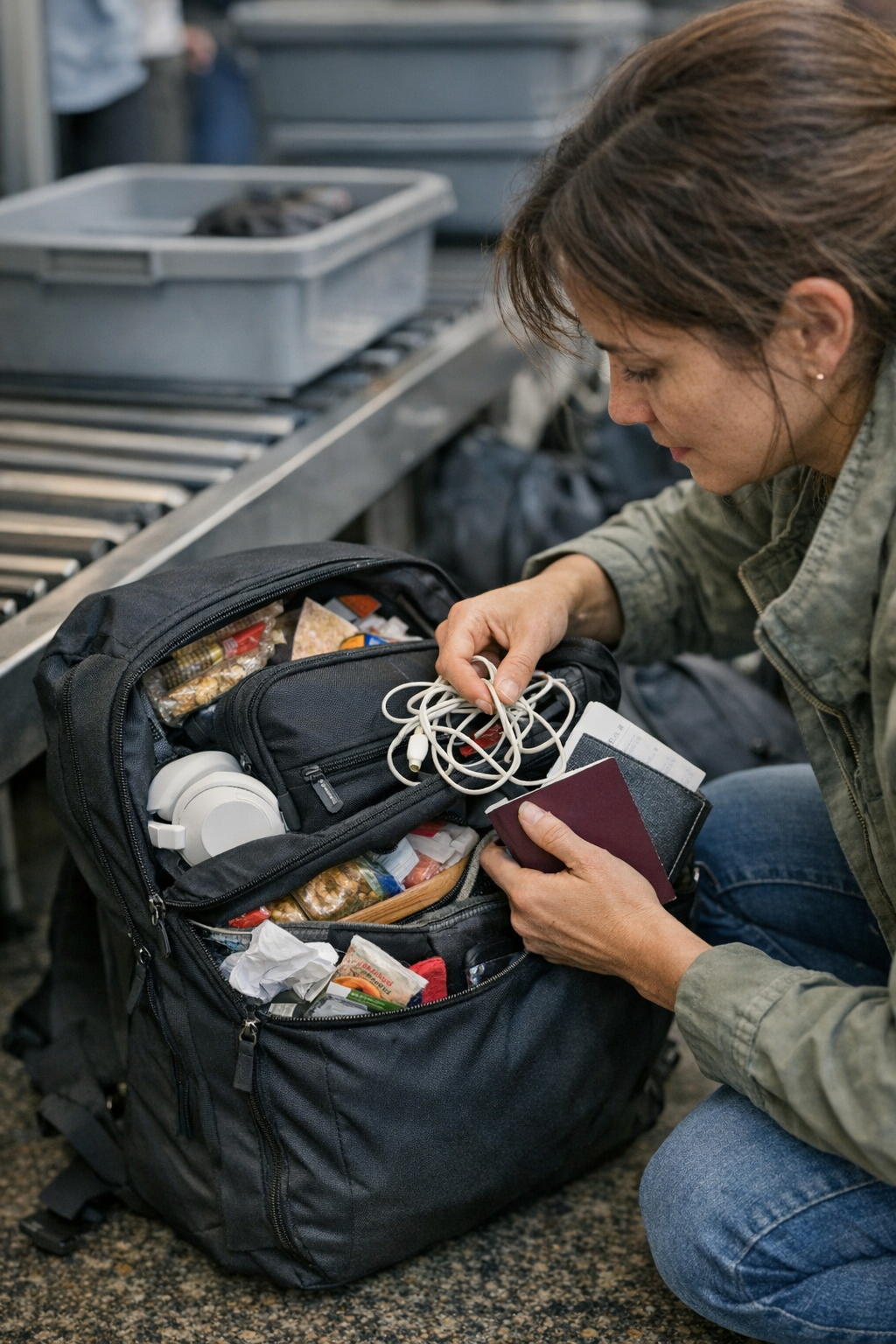
It’s easy to think you’ve finally nailed down a good system—everything in your carry-on lined up just so, zippers settling flat, pouches stacked like a little city block. I used to feel a quiet bit of satisfaction looking at my bag the night before travel, convinced this time I’d spend less time searching for things. What I didn’t expect was how quickly that tidy setup unraveled once I actually hit the airport: one disrupted line, a sudden search for my boarding pass, and the order I built started to fall apart in small but noticeable ways.
Somewhere between the first security checkpoint and the third time I reached for my passport, the gap between how the bag looked and how it worked became clear. Each stop for a document or charger exposed flaws—the way pouches overlapped, charger cables sneaking into paperwork, or the awkward reach when someone waited behind me at the scanner. You notice it after a few transitions. That slick logic of a single, layered space—so pleasing at home—turns clumsy and crowded when every retrieval comes under time pressure.
The Tidy Trap
It looked fine at first. Stacking organizers and slipping pouches into every available slot gave me a sense of surface neatness that feels good in theory. There’s comfort in seeing all the shapes aligned, believing a bag that looks organized should move smoothly through airport routines. But the difference kept showing up. A slim travel wallet stowed under a charging block became a choke point, always triggering a little fumble when I needed to show my ID. Each time I unzipped a pocket and pulled out not just the one thing I needed but half a handful of extras—wires, receipts, a tangle of headphones—it reminded me that visual order doesn’t mean functional order.
The Movement Test
Pressure finds the weakest spots. Shifting gates, quick boarding calls, tray tables flipping down mid-search—these moments that stress the setup show up almost randomly, yet reliably. I found myself repacking the same small items two or three times in a single hour, frustrated by how little anyone else seemed to notice but me. Every repeat action slowed just enough—not enough to break the trip, but enough to add drag. When a document needed handing over or a cable pulled out, what should’ve been quick became a ritual of sorting and re-tucking. Suddenly, ‘organizing’ felt less useful and more like a speed bump.
The Quiet Shift
One small change made more difference than I expected: separating documents and tech—for real this time—using only a single, clear outer pocket for everything that required fast retrieval. Less overlap, more direct reach. It meant one zipper path, not two, and nothing mixed in with papers or ID. Each time I hit a checkpoint, basics went right back where they belonged. There was a quiet relief in having fewer small surprises tucked between layers. The funny thing is, you rarely appreciate this the first time—only after a few cycles you notice how much mental space you get back by not having to remember where you last stashed each item. Movement becomes less of a negotiation, more of a reset.
Sometimes it just takes seeing the bag in motion—over a few real trips—to realize that what stays ready is what stays organized.
If you’re wondering what small carry-on shifts might help your own routines, you can quietly browse here: http://www.carryonsupply.myshopify.com