When Travel Turns Your Bag Into a Juggling Act
A carry-on that starts organized can fall apart under real travel pressure if its structure resists fast additions or quick retrieval.
When Carry-On Organization Stops Helping and Starts Slowing You Down
The first time your carry-on doesn’t keep up, it’s not dramatic. Just a small delay—maybe a zipper that resists, or a pocket that bulges a little more than before. It still looks organized when you unzip it back at the hotel, but somewhere in the shuffle through security bins and seat arms, things got a little harder. I noticed this not in the packing photos, but in the rhythm of reaching for the same items over and over while in motion.
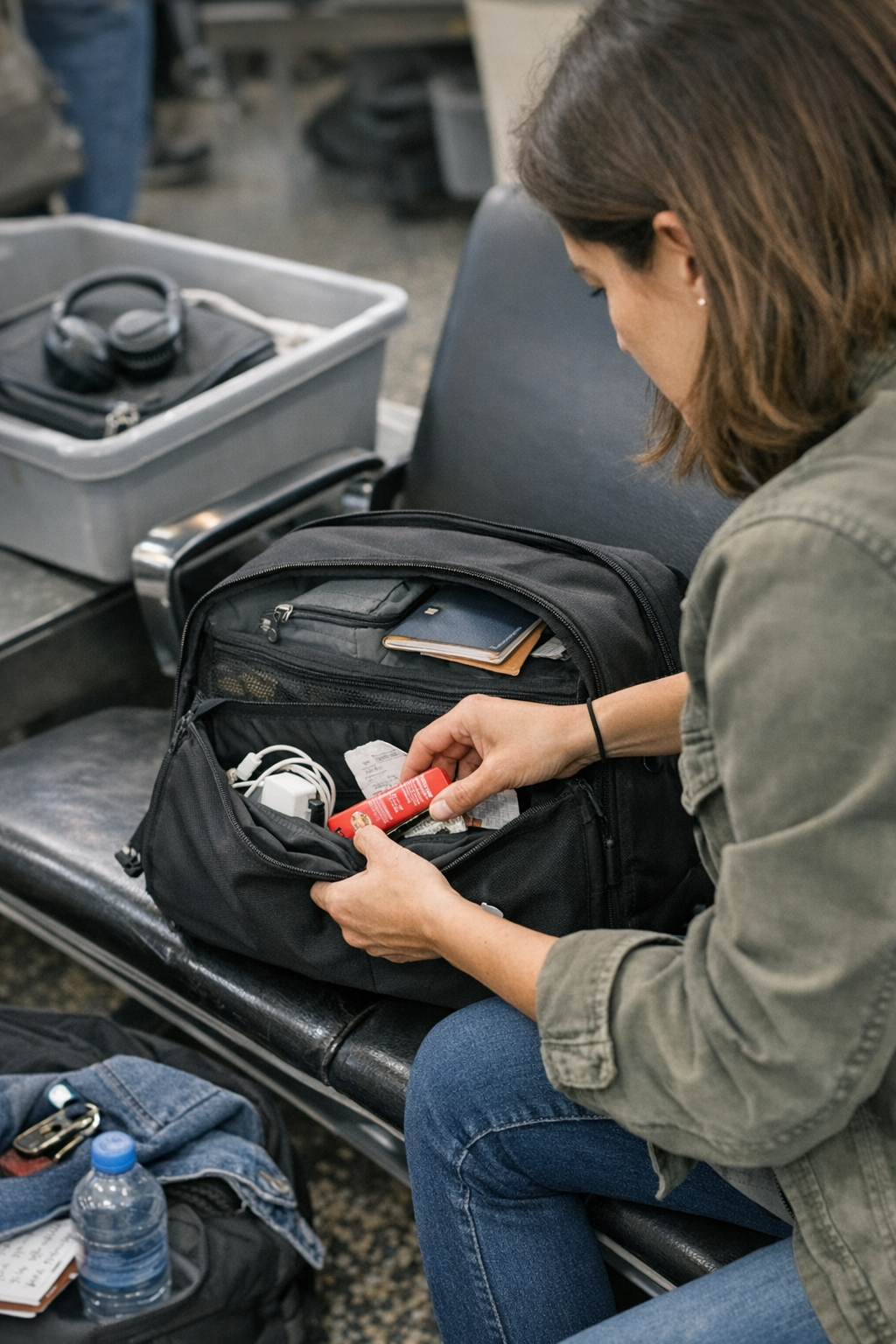
You notice it after a few transitions. What felt smart when packing—dividing chargers, documents, and comfort items into neat pouches—starts to get tangled with the messy reality of travel. On paper, every tool had its place. But in flight, each new addition—a boarding stub, a snack wrapper, a last-minute cable—never fits as smoothly as you’d planned. I kept finding myself standing in the aisle, half-blocking others, trying to slip a passport back into its sleeve without spilling everything else.
The Tidy Setup That Stalls
It looked fine at first. Every pocket zipped, every pouch filled just right. But the airport isn’t gentle; it exposes what doesn’t flex. Quick stretches between gates, rushing to pull headphones when boarding is called, adding a jacket on top—these moves poke at any system that was a little too perfect. The structure that helped at home asks something extra of you now.
That was the part that kept coming back. Sometimes I’d spend just as long putting things away as I’d saved by being “prepared.” Each new slip of paper or snack started a ripple; I’d reshuffle organizers, wrestle with too-tight pouches, press air out of a bulging front pocket, and still feel things shifting as I hoisted the bag overhead. The more I tried to keep everything in line, the more obvious it became—flexibility felt more like a hidden requirement than a luxury.
Real Movement Reveals the Gaps
The gaps show up in motion. It’s not just about organization; it’s what happens when you need to retrieve something fast, or stash a ticket stub mid-hustle. Repeated movement—tray after tray at security, pulling out liquids or devices, snapping the bag closed one-handed—turns small snags into friction you notice. The pocket system starts to feel less clever and more like an obstacle course.
On one trip, I realized what made the difference was a soft outer sleeve I barely used before—a flexible space I could trust to collect new odds and ends on the fly. Instead of jamming every extra receipt or snack wrapper into a “proper” pouch, I started letting those things land there, knowing I’d sort them out later when things calmed down. The main pouches stayed easy to unzip, and the zipper paths stayed clear. The bag didn’t look pristine by the time I landed, but it didn’t slow me down either.
Letting Go of Perfect Order
Airports give you enough rules already. Trying to impose rigid order on a moving target—especially a bag that lives half-open for most of a journey—can turn control into friction. The neatest system still relies on you snapping things back into place after every interruption. That part can actually wear you out before the layover is over.
There’s something oddly freeing about accepting a bit of chaos in the landing zone of your bag. Essentials still have their home base, but letting the fast-moving parts—extra snacks, loose headphones, boarding slips—cycle through a flexible space made all my repacking easier. Less perfection, more movement. The difference kept showing up in those small gaps between sitting down and standing up again, where it actually matters.
For anyone who wants to see how these setups look in practice, I sometimes check what CarryOnSupply puts together: http://www.carryonsupply.myshopify.com