When Treats Turn Into Daily Household Tension
Unstructured treat routines cause stress and extra work; a fixed treat rule with set placement cuts negotiation and daily mess.
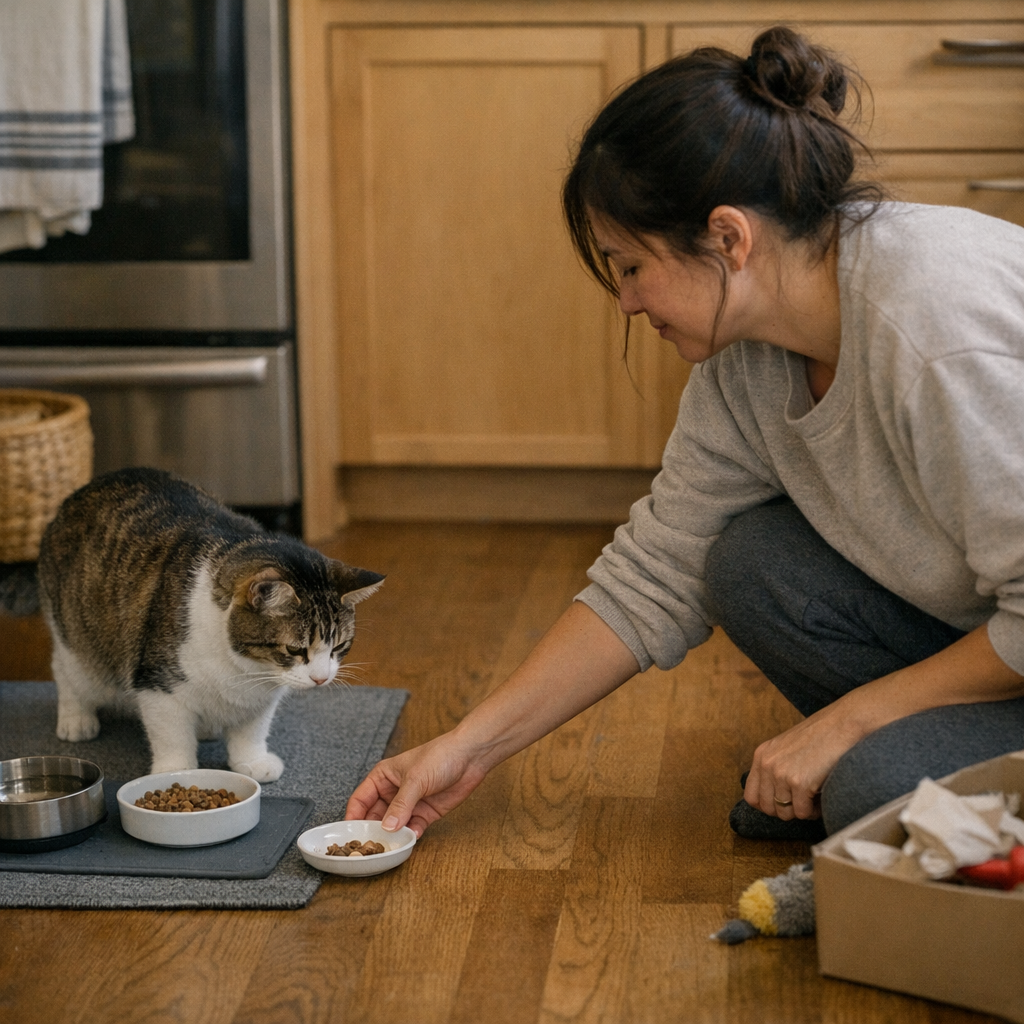
You don’t notice it on the first day. One treat is a small gesture—a reward, a truce, a fill-in before dinner. The bowl is easy to refill, the mat hasn’t collected much. But by the fifth afternoon, your cat pauses by the feeding area, not waiting for a meal, but watching you expectantly for something extra. You realize the feeding corner has quietly shifted.
The lines between treat and meal start to blur. At first, it’s just location—a treat left on the mat, a sweep of crumbs by the bowl, your cat lingering a little too long after eating. There’s a subtle pull, an expectation building between you and the corner where feeding, water, and litter all exist in close proximity. The water bowl and litter setup remain stable, unchanged. But the treat moment spreads. After a few resets, there’s more circling, a quicker dash at the sound of the treat bag, new anticipation whenever you approach the treat drawer. The room looks much the same, but the pressure feels different.
It looked fine at first. The small mat held crumbs, the bowl stayed central, the snacks tucked away in a drawer. But after a while, the tidy look wasn’t enough. Treats handed out as moods struck left their marks—bits swept up, a faint trail along the edge, a restless cat making every meal its own negotiation. That recurring tension returned. When treat moments coincided—just once—after grooming, the sense of boundary returned with it. One plate, one quick cleanup. The low-level mess stopped demanding its own solution. The feeding area felt quieter; your routines did, too.
How Treat Time Shifts Feeding Space Rhythms
If the line between snack and meal stays loose, the feeding space rituals change without warning. The rhythm shifts from smooth to interrupted. It’s usually about where the small things live—the plate, the treat mat, the hand that lingers a moment too long. One subtle adjustment—one consistent dish for treats, always away from the food bowl—makes the practical difference between a feeding setup that runs itself and one that needs daily fixes. Living through it, the change feels obvious in hindsight, but only after you've swept the same mat more times than planned.
Feeding resets slow as the treat habit grows: slower refills, lingering crumbs near water, delayed wipe-downs around both food and litter areas. Even though toy trails and grooming-adjacent storage stay relatively organized, the treat spots invite residue that keeps returning. A setup can look tidy and calm but still wear thin in daily use. Comfort and upkeep tug in opposite directions. The feeding corner shows how subtle shifts in routine slowly expose weak points in the home’s cat life structure.
Some rituals become obvious only as they take over quietly, like the way a treat mat picks up crumbs over time or how a cat’s circling intensifies before feeding. More observations like these come up regularly on StillWhisker’s blog, which focuses on real indoor cat routines: feeding area flow, water refills, litter-adjacent cleanup, grooming storage, rest corners, scratching zones, toy returns, blanket resets, and all those shared spaces that cats and humans live in together.