When Upper Shelves Become Overflow: A Quiet Daily Struggle
Keeping upper entryway storage reserved and clearly labeled for monthly-use or backup items prevents clutter, speeds resets, and reduces retrieval mistakes.
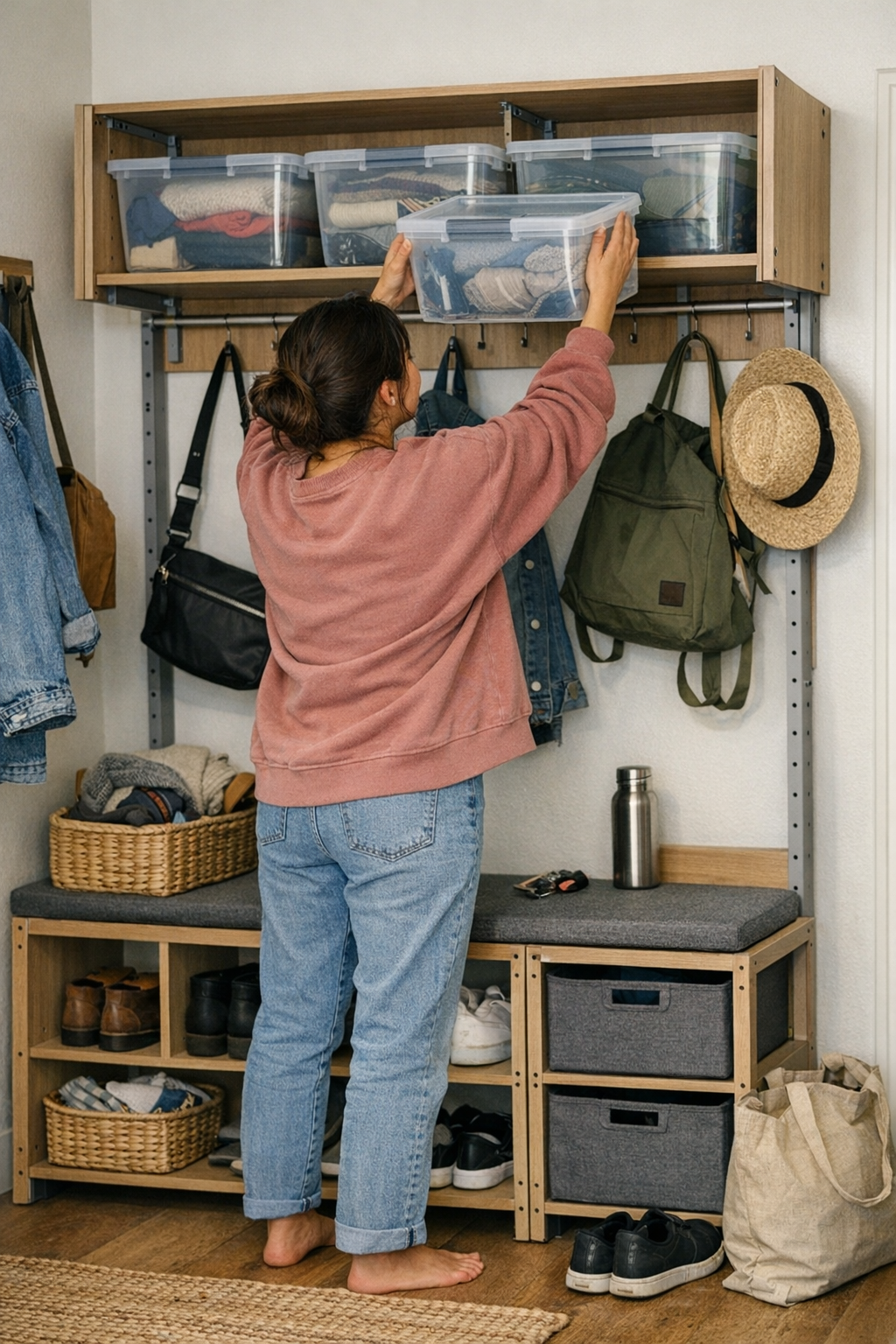
Sometimes the slow shift is easy to miss. After a few weeks of using the new transition-space setup, I noticed that the places meant for backup gear—high cabinets and wall-mounted bins—were filling with things we reached for every morning. What started as one pair of shoes set “out of the way” or a backpack hoisted up just for one evening gradually became a pattern. The space looked organized at a glance, but the rhythm of comings and goings changed beneath the surface. Looking for a rain jacket turned into a minor hunt. I found myself skimming the top shelves for keys that should have stayed by the door.
Where Resets Begin to Slow
This doesn’t happen all at once. At first, a high shelf takes pressure off the entry bench, clearing a spot or hiding overflow for a few days.
But small decisions add up over time. The upper cabinet—intended for spare gloves or seasonal boots—collects mail, school notes, a dog leash, last week’s beanie. It’s subtle. The lower landing feels less crowded, but arrival and departure become more tangled each day. There’s hesitation at the threshold, a brief shuffle while everyone tries to remember where they last stashed what.
That lingering pause at the door—the kind caused by too many “temporarily” placed things in awkward spots—kept grabbing my attention.
The Blurred Line Between Backup and Daily
Eventually, it became clear what was happening. The clear distinction between immediate-use items and backup storage was eroding under the pressure of quick morning fixes.
When high storage starts filling with everyday objects, it forces small, inconvenient stretches—both physical and mental. Shoes end up in bins above eye level; bags disappear and resurface days later, toppled behind closed doors. Each makeshift fix turns into a hidden delay. The system loses its logic, and what was meant to be a quick entryway reset becomes a slow untangling of misplaced categories.
The key change wasn’t just about removing clutter but managing the kind of clutter and where it landed. Backup gear can live out of reach for a while; daily items want to be within easy reach.
Boundary Lines Hold Everything Together
The simplest shift was using clear, labeled containers up high—and making a habit of scanning them monthly instead of weekly. This quiet boundary blocked the drift: if something was needed every day, it was obvious it no longer belonged in the “rarely used” zone.
There’s something grounding about that division. Entryway spaces keep their shape longer, even when arrivals are rushed or weekends turn into a stack of comings and goings. The entry zone feels lighter—not just visually but in practice. Routine moments flow cleaner, with a little less friction in the doorway.
It’s striking how fast a transition space can lose its clarity, and how much smoother everything runs once high storage zones are protected from daily overflow. It’s a small difference, but it keeps the room moving instead of pausing.
There’s more to consider, but for now, this approach has made movement feel a little easier—and here’s a quiet place I found some options to help: http://www.betweenry.myshopify.com



