When Utility Rooms Quietly Lose Their Calm
Utility room storage fails when return flow breaks down under real conditions: bottlenecks, overflow, and tough resets occur without clear, vertical, segmented solutions.
There’s a certain relief that settles in when you walk through a transition space and realize you’re not bracing yourself for clutter. It’s not about a glossy, picture-ready moment after a deep clean—just the quiet feeling that your entryway and drop zone aren’t working against you. The usual questions—how things end up in piles, why the morning shuffle drags on, or why shoes seem to multiply at the threshold—get a little quieter. Living with a well-designed transition space setup shows its impact slowly, in those everyday moments when the room meets real demand without falling apart.
How Disorder Creeps in When Routines Collide
You don’t notice clutter building up immediately. A few hurried arrivals, a couple of sleepy departures—then suddenly the bench edge disappears under hoodies, and the walkway narrows. Shoes drift out from their row, bags slide off a corner, and that one piece of gear never quite finds its way back to its home.
The real difference between a transition space that holds up and one that doesn’t often comes down to details: does each item return precisely to its place, or does new clutter sneak in around the edges? The tension isn’t about mess so much as whether the system absorbs real daily routines or gets overrun by them.
When the Right Structure Takes the Pressure Off
My realization came on the fourth rushed morning in a week. The old setup—the deep shoe bin and a bench meant only for brief sitting—looked neutral at first. But heavy traffic wore it out quickly. Each drop added another layer, and resetting the space meant more time untangling piles than moving forward.
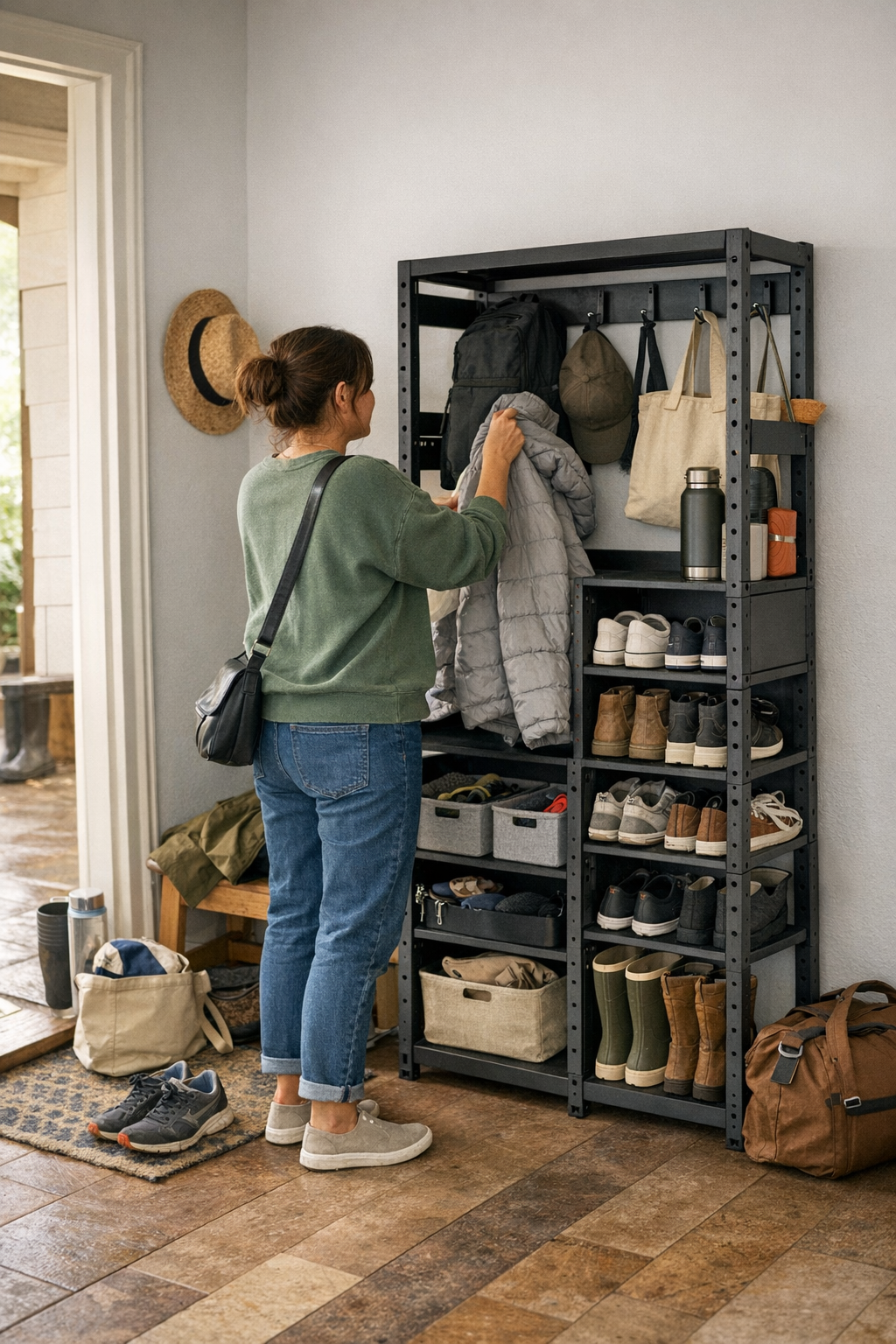
Switching to a vertical wall rack with open cubbies right along the main walkway changed everything. Shoes landed in their exact place instead of just nearby. Bags perched upright, separated instead of collapsing onto one another. Even after the morning chaos, the threshold stayed clear and walkable. This was the difference I kept coming back to. Movement wasn’t blocked by a stray pair of boots or a pile ready to trip you up. It wasn’t about how tidy it looked—it was about being able to move freely, again and again, without hesitation.
The Unexpected Calmness of Quick Recovery
It’s easy to focus on looks at first—the clean lines and promise of order—but the real benefit lies in speed and simplicity. Coming home in the rain, hands full, there’s no second-guessing where things land. Everything is upfront, within reach, nothing hidden or lost at the bottom of a bin. You avoid that creeping dread before opening the door. Instead, the routine becomes almost automatic.
Maybe this is the truest test of a transition space that really works: how little you have to notice it when you’re busy, and how quickly it resets even when life unravels a bit. If you want to explore how modular, slim, and vertical storage can shift your daily rhythm and keep your entryway functional, Betweenry offers some quiet solutions worth seeing.