When Wet Gear Disrupts the Flow of Home Life
The best way to keep wet gear from dirtying your space is separating storage from traffic with open, drying systems, not just containment.
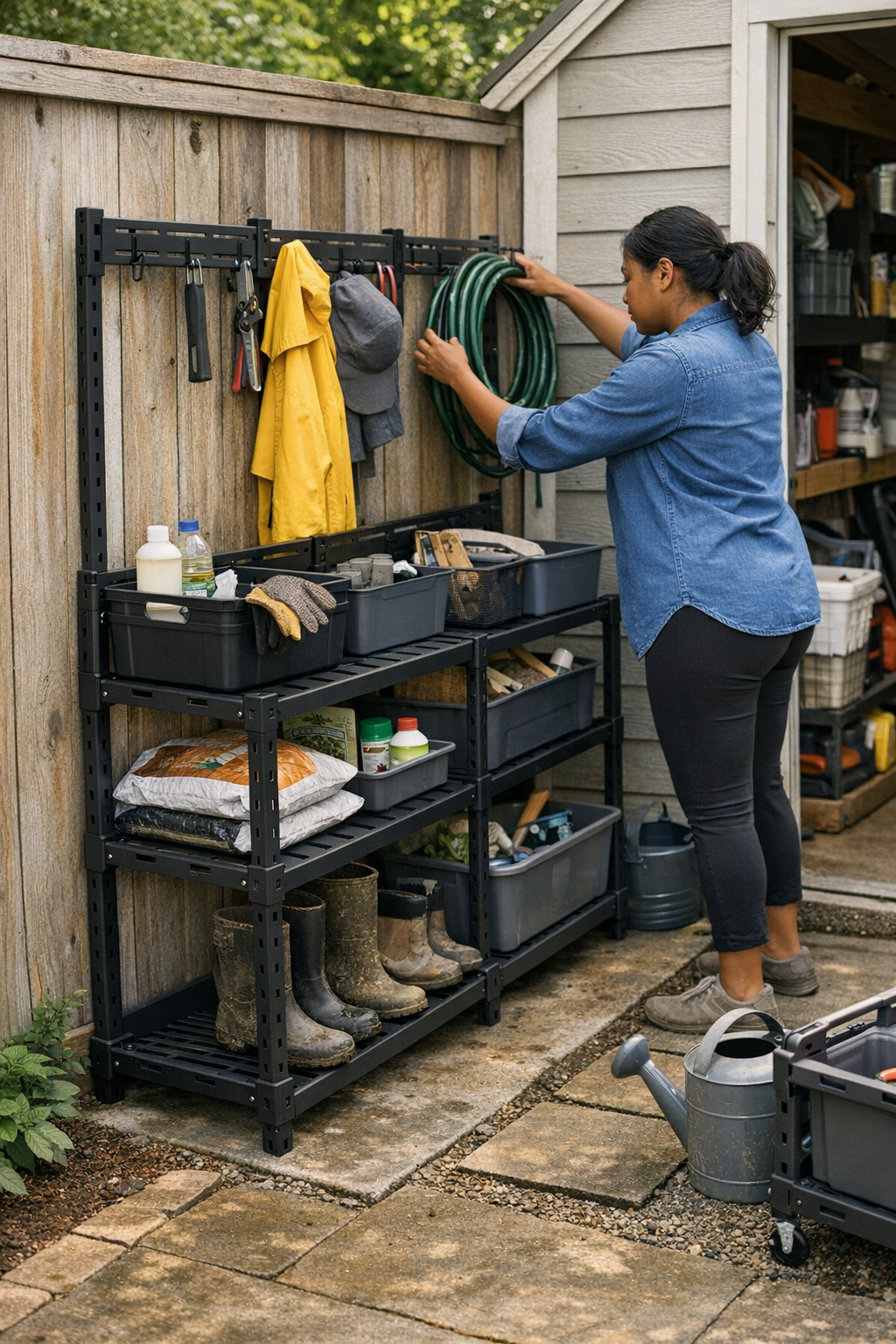
There’s a familiar satisfaction in coming home to a porch or mudroom that looks perfectly organized—jackets lined up, boots neatly arrayed in trays, and the walkway clear. But the real test isn’t how things look after a quiet day. It’s what happens after the rain, or when three sets of muddy boots arrive all at once. That’s when you realize the line between order and chaos is thinner than you’d like to admit.
Most outdoor storage solutions promise containment. Trays, racks, even modular wall units—they signal discipline or at least an attempt at control. But the way gear actually moves—wet, heavy, and arriving in waves—makes these tidy lines bend. Suddenly, a neat row turns into a bottleneck, water pools on the floor, and there’s a sideways shuffle around soggy coats and boots.
You may not notice it straight away, but you feel it when things overflow.
How It Breaks Down So Easily
The breakdown happens fast. Walkways that felt spacious shrink under piles of boots. Trays fill up quickly, and water slides beneath them, tracing its own chaotic path. Once that cycle starts, cleaning stops being about resetting order and becomes more about rearranging—dodging wet coats, propping gear to dry, and trying not to spread mud further into the house.
In my own space, the tipping point wasn’t daily use, but busy weekends or an unexpected storm. Those situations exposed the limits of the setup more than regular days ever did.
It made me realize: the challenge isn’t always how much gear you have, but how it moves—or gets blocked—in the small outdoor areas we try so hard to keep neat.
The Calm of Unblocked Movement
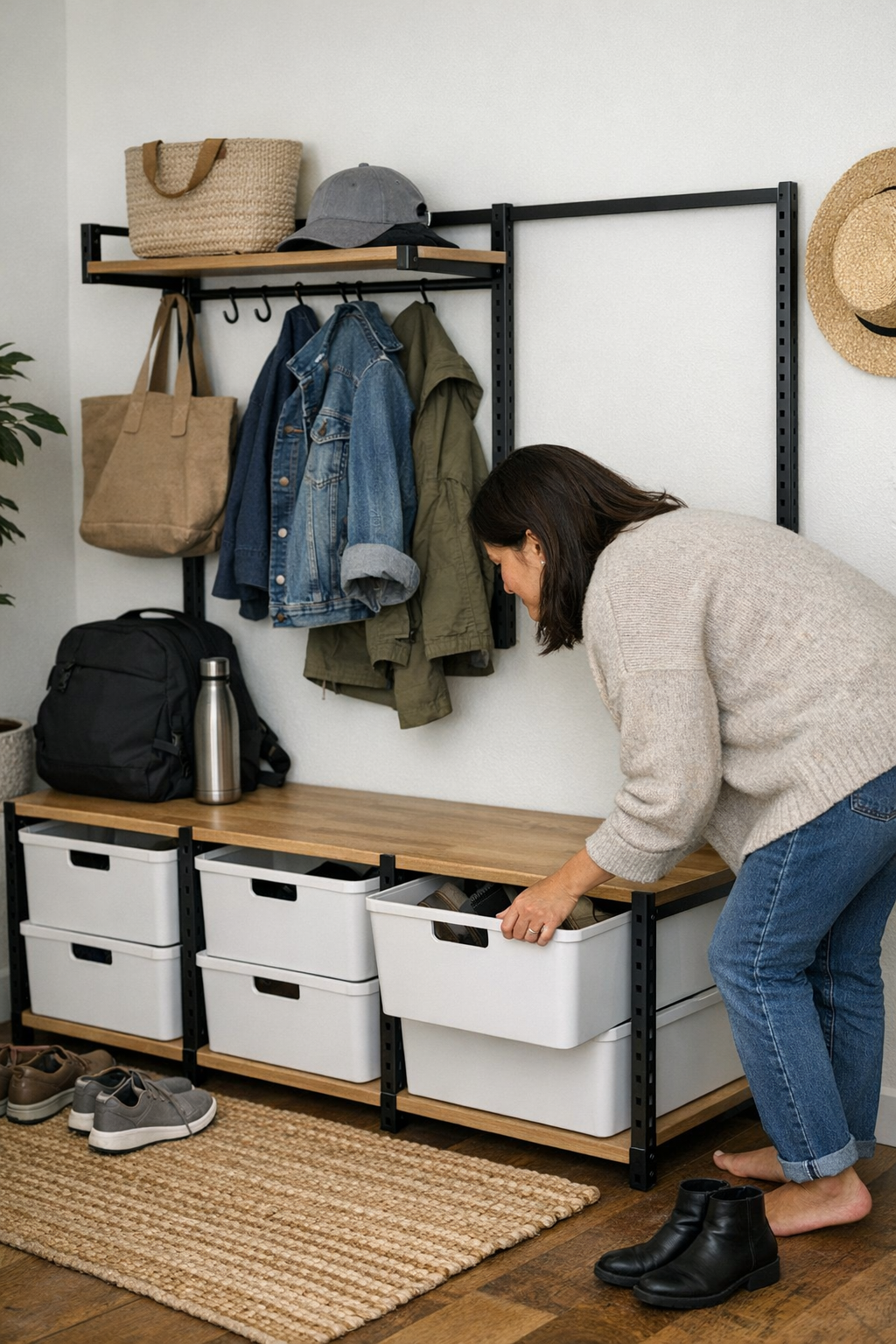
There’s value in giving up the fantasy of complete containment. I made a simple change: moving the main boot drop-off point out of the narrowest part of the walkway, swapping dense racks for an open wall rail, and leaving a low shelf clear to catch drips and debris. It didn’t add square footage but changed how the space functioned.
The difference was immediate. Air circulated better between boots. Drips landed away from walkways. Even on busy days, there was breathing room. Fewer time-consuming shifts just to get through the door.
You don’t always need more bins or barriers—sometimes shifting things a step to the side creates flow and lasting order.
What Stays After the Rain
The lesson came slowly: the best setups keep moving parts open. Not just for looks, but so you aren’t fighting your own efforts to stay clean. Open racks dry gear faster; raised shelves let grit fall away; spacing hooks help the line move smoothly when families file in at once.
Containment isn’t the same as control. The best kind of order endures through messes, not just after big cleanups. Over time, a little separation and a clear path matter more than a rack that looked perfect on day one.
These insights settled in from quiet adjustments in my own entryway—thoughts that lingered long after the last puddle dried, and that brought me here: http://www.tidyyard.myshopify.com