When Wet Shoes Threaten the Calm of Home Entryways
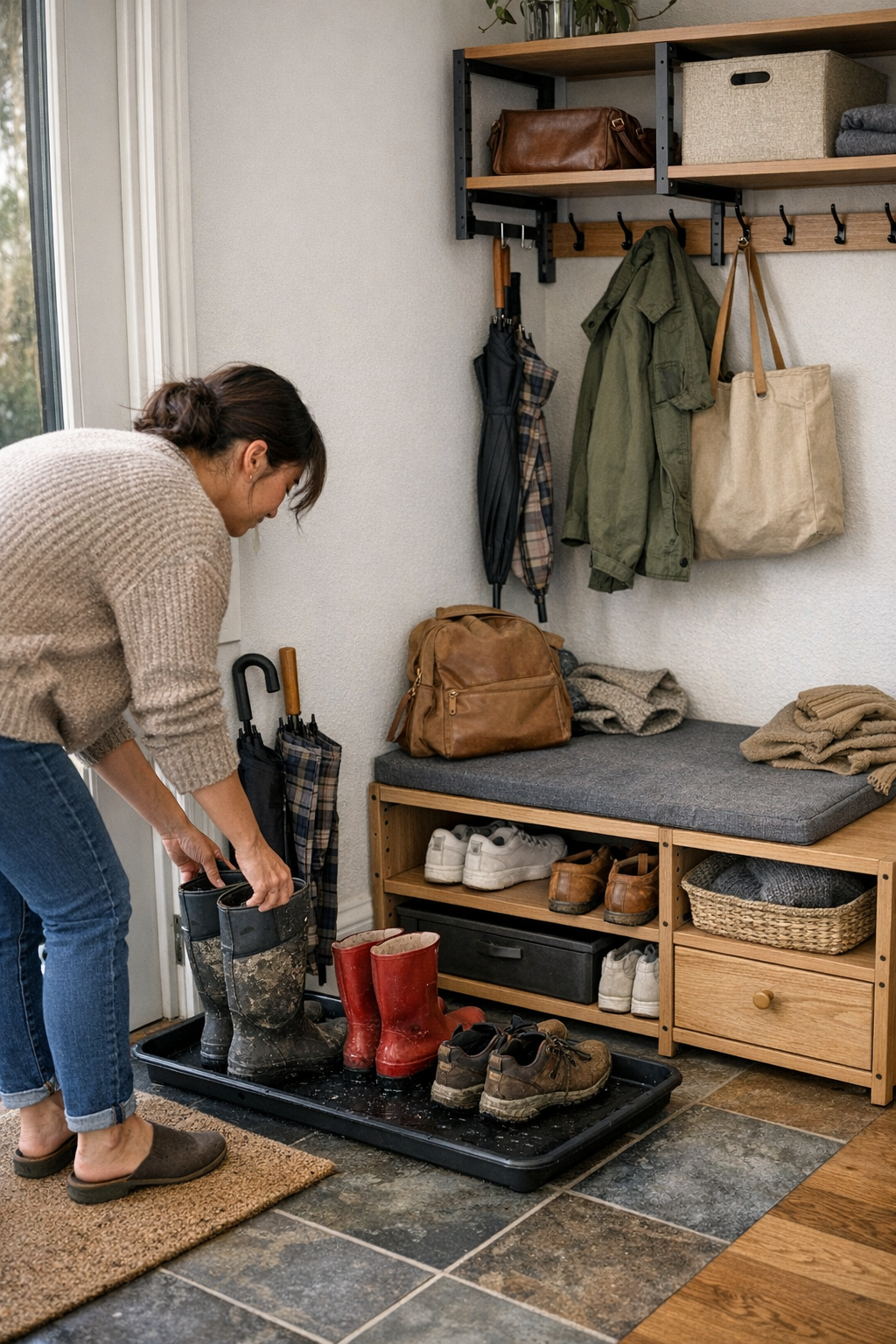
A clear wet zone in entryway storage prevents moisture from creeping into dry areas, reducing hidden mess and reset effort.
The Relief of Finding Where Wet Belongs
There’s a quiet relief in crossing a threshold that actually holds the weather at bay. After the third or fourth soggy arrival on some days, the way water tracks inside feels almost personal—the clutter building at the edge of the bench, the slow damp creep along the cabinet’s base. I never gave much thought to where wet gear belonged; it was just part of the repeating blur of coming and going. Until standing water started pooling in places that should have stayed dry, and the line between entry and home began to dissolve. That ongoing, almost invisible battle between wet and dry is what finally made me rethink how the space really works.
Invisible Lines in Daily Life
You don’t notice it right away. Moisture migration isn’t obvious—soft stains on a utility seat, a slick patch hidden under a shoe tray that no one returned properly. Sometimes, the boundary only becomes clear in hindsight, like when a bag left on the edge of a bench picks up an unexpected cold dampness overnight. In transition spaces, surfaces invite this blurring more than you’d expect. Shoes inch past the mat, bags drift toward walls, umbrellas open just slightly across a vertical rack.
The problem isn’t always the obvious puddle, but the sense that each arrival subtly shifts the boundary. I kept circling back to that persistent feeling.
Subtle Shifts Make the Routine
A real change happened when the “wet” zone moved right next to the door—no mingling with dry storage, just a narrow water tray catching the first step inside. The rest of the routine smoothed out without me really noticing, like less had to be negotiated with each arrival.
There was a morning when shoes actually dried where they were placed, and the cabinet interior stayed untouched after a messy day. You notice the difference—not just in visible tidiness, but in how you pass through, less tense, less guarded.
That was the part I kept returning to: not the appearance, but the lower effort it took to keep things that way.
When Transition Finally Stays Contained
Modular storage, slim and vertical racks, and mobile units only do so much on their own. It’s really the silent barrier—a shallow floor tray, a closely mounted wall rack, the unspoken rule about where wet things stop—that prevents messy routines from multiplying. The entry no longer feels like a battleground between seasons and order; it just works quietly. The relief isn’t loud, but it lasts.
For anyone curious about these in-between solutions grounded in repeated real use and changing daily needs, you can find more ideas softly gathered here: http://www.betweenry.myshopify.com



