When Wet Wood Challenges Your Saw’s Strength
Using a standard blade on wet lumber causes motor overload and rough cuts; a 24-tooth framing blade prevents bogging and keeps cuts clean.
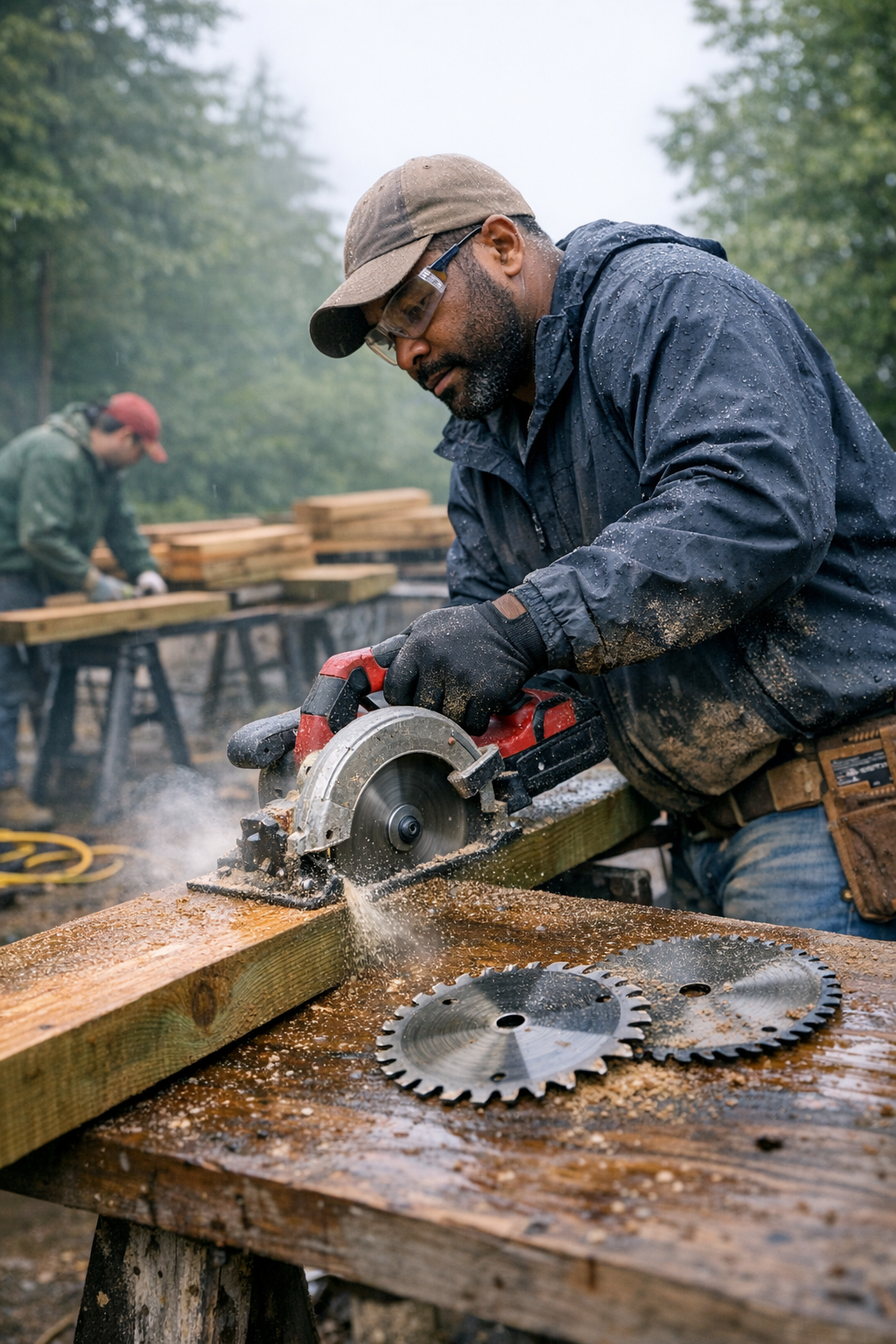
Most of us don’t pay much attention to the blade resting quietly in our saw’s case. It’s only when the workday meets rain-soaked lumber—and suddenly, every cut grows harder—that we notice how much those details matter. The familiar hum of a circular saw shifts lower, the effort rises in our arms, and there’s a small nagging sense that things aren’t supposed to be this slow.
You don’t notice it immediately.
But it settles in—the hidden strain, the gradual resistance, the motor’s quiet protest.
Why the Saw Feels Different in the Rain
There’s something unsettling about the way wet lumber changes your rhythm. One moment, everything’s running as usual; the next, the blade drags, sticky sawdust clings, and even the sharpest finish begins to roughen. If you’ve stood over a bench after a long rain, you might have seen this yourself. The cut feels off, the aroma of damp wood rises, and cleaning the guard becomes part of the routine.
What’s really happening? Wet boards aren’t just a little heavier. They plug up the teeth and gullets of standard blades, slowing progress, inviting burning, and quietly overworking the saw’s motor. Each cut pulls you further from the easy flow of dry wood, and frustration builds in small, quiet ways.
The Overlooked Weight of Momentum
It’s easy to think that any sharp blade should work—especially in the thick of a project, when everything is already behind schedule. At first, an all-purpose or combination blade seems to move through green wood just fine. But those first clean cuts can be deceiving. By the third or fourth board, there’s a change: the motor strains, the sawdust turns pasty, and you have to muscle the handle more than usual.
You feel it in your hands before you spot it in the cut. Edges look splintered, burn marks appear, and there’s a raw, unfinished quality left behind. Sometimes, when the jobsite is quiet for a moment, you realize how much extra sanding and effort this will mean later.
A Subtle Shift, A Simpler Solution
On sites where the rain lingers or fresh-cut wood is the norm, switching to a true framing blade—a 24-tooth blade with broad gullets designed for debris—quietly resets the day’s pace. Suddenly, each slice sends wet sawdust flying clear, the saw returns to a steadier tone, and the finish needs less correction. The process stops feeling like a battle with every board. Nothing dramatic, just an easier rhythm returning.
It’s a small change that keeps everything else from getting harder—less friction, fewer stalls, and a saw that sounds the way it’s meant to.
Thoughts like these drifted in after clearing a stubborn blade guard for the third time one rainy morning. Sometimes the smallest swaps soften a whole day’s work.



