When Winter Weather Quietly Undermines Your Tools
Tool batteries lose runtime and output faster in cold due to slower chemical reactions, causing rougher finishes and wasted time if unaddressed.
It’s strange how you don’t give a second thought to battery life—until it leaves you stranded mid-task, hands cold and plans paused. Cold mornings reveal what summer afternoons hide: the subtle changes in tool performance that can quietly shift the flow of work.
For those of us building in rhythm, a tool’s battery isn’t just a power source. It’s a silent partner in the day’s work—a partner that, once winter arrives, can quietly let things slip. Tool battery runtime in cold weather becomes more than a technical issue; it turns into gentle friction in the craftsmanship. You might not notice it in the first few cuts, but by the end of the job, you will.
A Slow Drift Into the Cold
At first, the signs are almost invisible. Maybe the saw feels a little duller, or the drill hesitates a beat before spinning up. You don’t notice it immediately.
But you feel it.
Every cut and pass carries just a bit more effort. Edges that were crisp start to roughen. What used to feel smooth soon becomes labor. The more you press on, the more you find yourself sanding, brushing off splinters, quietly losing patience with seams that refuse to meet as planned.
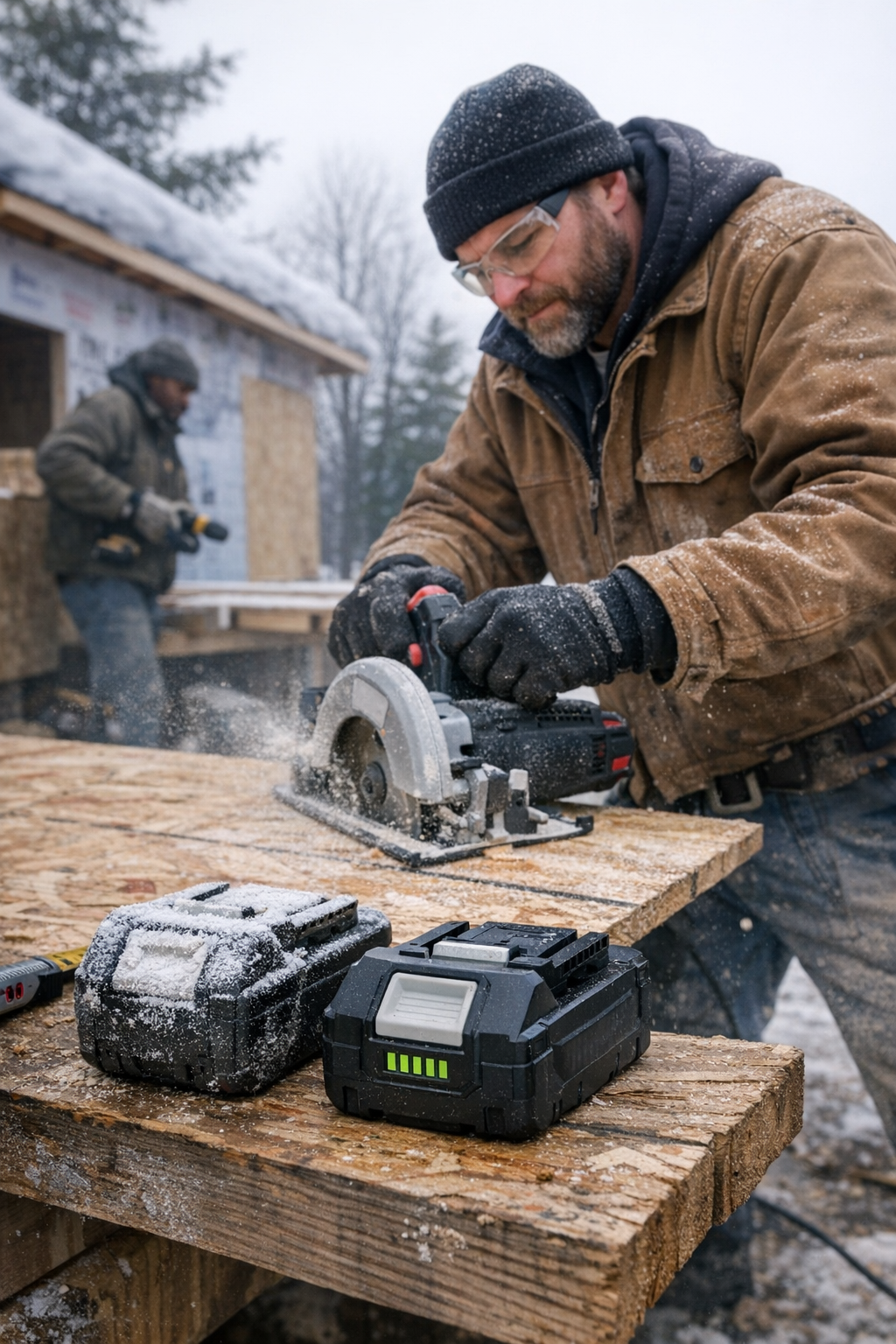
I remember a January morning, hands wrapped in gloves, trying to finish sheathing before snow moved in. One battery came straight from the warmth of the truck’s cab; the other had spent the night outside. The difference didn’t announce itself with a warning light. It crept in with each cut—the warmth gave play and certainty, the cold made the saw wander, as if the tool itself were tired.
Where Quality Quietly Slips
This isn’t just about how long your battery lasts. Cold weather changes the very character of the work.
Precision projects—cabinetry, trim, anything where the finish matters—feel it the most. Drift in the battery brings drift in the line. Soon, you’re not just making more cuts, but fixing more mistakes. A slight voltage drop shows up as soft edges, hidden inside the familiar sound of the tool laboring through pine.
On repeat cycles, cold batteries turn reliable progress into a series of corrections. There’s more to sand, more tiny gaps to hide, more downtimes warming your hands around a thermos. It’s a quiet erosion of quality, not dramatic, but undeniable when you step back at the end and look at your progress.
It’s curious how two identical batteries become such different companions depending on where they rest between shifts.
A Little Warmth Changes the Pace
There’s a practical insight here, though it doesn’t feel like advice. I started keeping batteries in an insulated bag inside the cab—simple, no secret trick. Swapping warmed packs every few runs brought back the familiar, steady tone to the saw and smoother, more predictable finishes. The sawdust even settled differently, as if the job had found its old rhythm again.
It’s not about chasing perfect efficiency. It’s a way to lose less to those small, invisible slips—the kind that only matter if you look closely at how a day’s work actually finishes.
I find myself quietly adjusting my habits now. Cold slows things, yes. But there’s always a moment to pause, to bring a little warmth back into the pattern. And something about that feels like a reminder.
After all, the real progress is always in the details you notice when you’re paying attention.
These thoughts came together out in the winter, hands thawing between cuts with a thermos nearby.