When Work Zones Slowly Fill Up: A Quiet Struggle
Clutter creeps into work zones when storage fails to channel movement and clear return paths; proper setups keep zones open and reset easy.
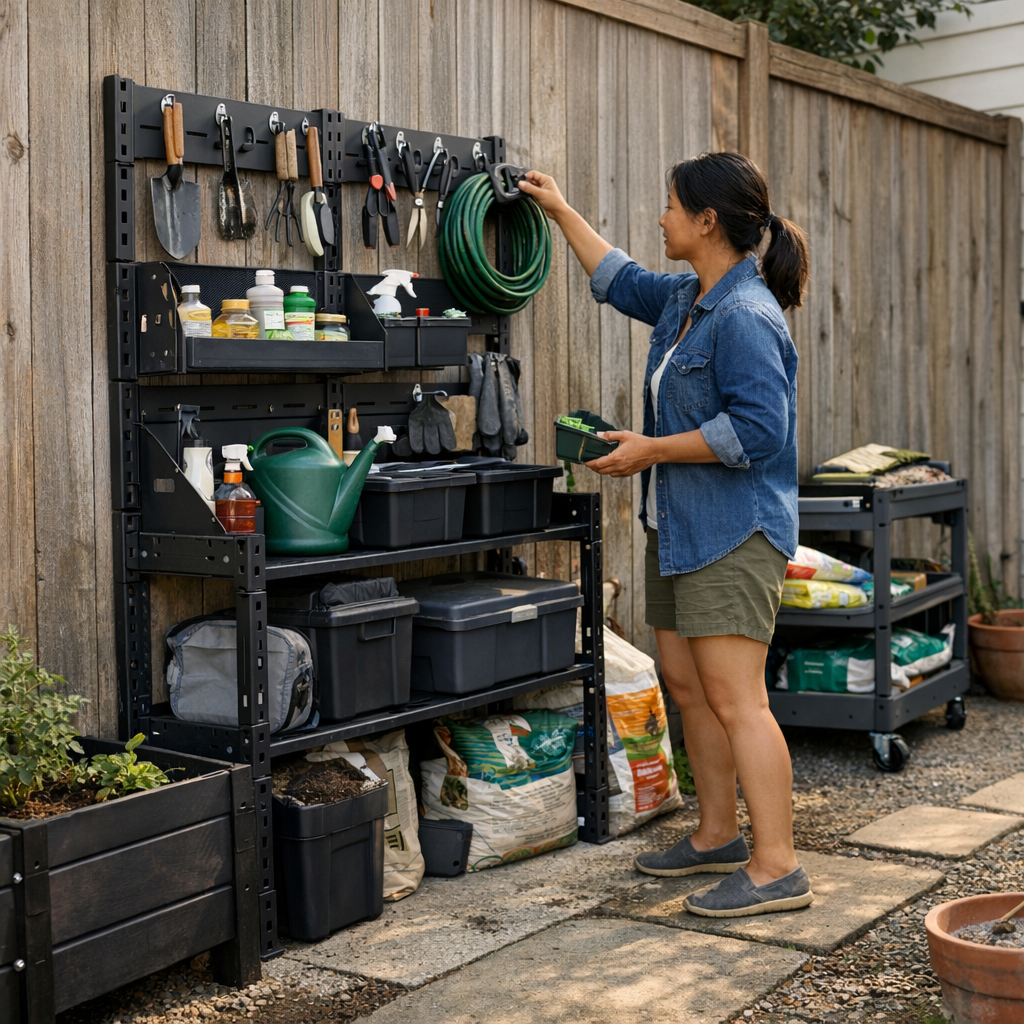
It’s rarely a big mess that gets you. The order of a backyard work area doesn’t unravel in a loud, obvious way—it just loosens, quietly, in the background. At first, the storage setup seems fine, holding the tools exactly where you left them after a burst of gardening. Then, after a few days, something shifts. The path you always use starts to shrink. A bin has wandered out of bounds, and small piles of gloves and seed bags have crept along the benches. You don’t notice it immediately, but you feel it.
How Boundaries Fade, Piece by Piece
Every storage system, no matter how tidy at the start, meets its test in real use. I watched a narrow stretch of our yard slowly give in—despite all efforts to keep things in order, the ground grew crowded, movement slowed, and the zone felt stubbornly harder to cross at the end of each week. Anyone who’s tried using floor bins or awkward shelving probably knows this scene well: routines speed up, storage can’t keep pace, and shortcuts pile up into stumbling blocks.
But that was the part I kept coming back to. The slow build-up wasn’t random; it was the structure quietly giving up, unable to keep the flow moving.
The Subtle Shift of Moving Things Up
Something interesting happened after swapping in a wall-mounted rack. With tools visible and stored off the floor, walkways stayed open even under heavy routine use. There was less shuffling, less stepping around obstacles—just a clear path, steady and uncluttered. Adding a clearly labeled “return later” spot gave odd-lot items a home, rather than letting them drift into corners or create decision fatigue during cleanup.
The difference was quiet. But it made the zone easier to return to, even when the work was messy.
When Space Holds Its Shape
Clutter in a backyard workspace isn’t about laziness—it comes from friction, the small extra effort of returning something when the path isn’t clear or the storage asks too many questions. The setups that last are the ones that work with the way things actually move, shaping resets into smooth patterns instead of chores. Sometimes, just one well-placed rack or a clearly marked holding bin is enough to take the edge off the whole thing.
Shaping small boundaries, especially above ground, gently trains movement back into place. Not dramatic—just a routine you can settle into. Over time, it makes the difference between fighting clutter and feeling quietly ready for whatever comes next.
These reflections found a practical footing while reworking a side-yard stretch and can be revisited here: http://www.tidyyard.myshopify.com



