When Workshop Air Stays Clear Through Long Days
Workshop-rated fans reduce dust, fatigue, and finish issues during long tasks by matching CFM to conditions and optimizing placement.
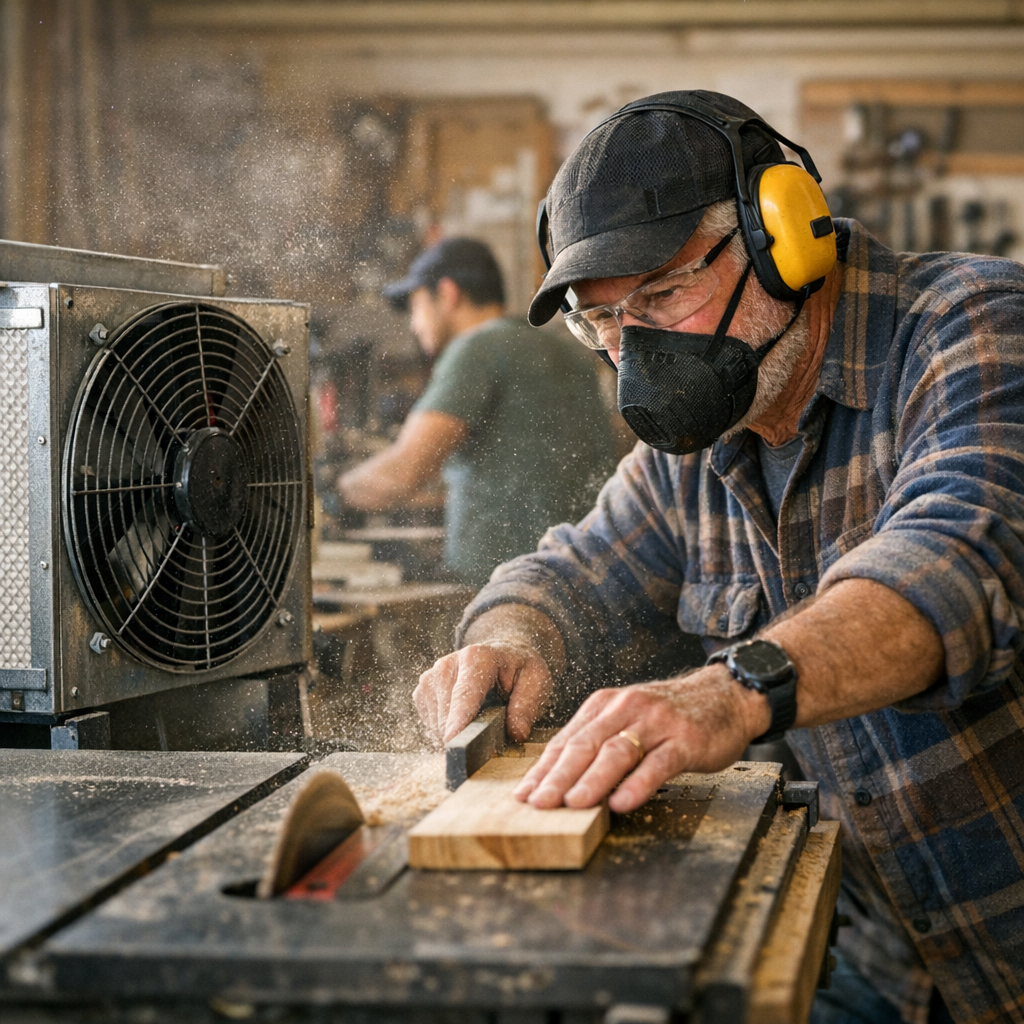
Some changes you don’t notice until something feels off. In my shop, that difference creeps in quietly—air that once felt fresh now grows heavy. Dust lingers, routines slow, and suddenly, every surface seems to need wiping before you can begin again.
This isn’t just about the visible sawdust from the latest sanding run or the quiet haze settling near the ceiling fans. It’s about how the right kind of airflow shapes the ritual of making—how quickly a room grows tired if the air isn’t moving the way it should. Choosing between a regular exhaust fan and one built for real workshop use turns out to matter much more than it first appears.
You don’t notice it immediately.
But you feel it.
Where Dust Hides When the Tools Start Up
Early on, any exhaust seems good enough. The first hour of cutting or sanding, a standard box fan will clear the air—at least, at a glance. The surface dust lifts, the smell of glue and wood vanishes for a while, and there’s a feeling that things are under control.
But then, the edges start to thicken. Work stretches, the room grows quieter except for the tools, and something subtle changes: dust gathers along the baseboards, your shoes scuff through light powder, and clamps or handles become faintly tacky. Each pause to clean up drags on a little longer.
I’ve seen it: running the same batch of panels through with a common fan, the air grew dense after a few cycles. Even with the fan humming, it wasn’t enough. It’s a small discomfort at first, easy to dismiss, but it adds up.
Why Heavy-Duty Fans Don’t Tire Out
A week later, I swapped in a workshop-rated fan—one built for keeping air renewed long after most fans would bog down or start clogging. It wasn’t just about more power or louder noise. No forceful gusts. Just steady, invisible movement.
Four hours in, what struck me wasn’t the noise (barely more than before) but how little the air changed. Dust landed only where I expected, right near the blade’s edge, not out across benches or into the corners. Even the chore of cleaning up didn’t feel like a separate job—benches stayed ready, tools didn’t need extra scrubbing, and nothing stuck in the finish.
There’s a kind of peace in knowing the space will last through a full day without growing heavier as you work.
When Airflow Keeps the Work Moving
There’s an old bit of advice about matching fan power to room volume, but in reality, it unfolds more subtly—like watching how a breeze clears out a room or seeing where dust settles in the sunlight. The switch to a continuous-duty fan didn’t just save cleanup time; it eased the flow of the whole process. Fatigue ebbed. Decisions came quicker. Even the next task felt fresher, as if the shop itself had more hours left.
The point isn’t to fuss over specs, but to notice how the air feels after the tools run for a while: is it heavy or light, still or quietly cycling out? The right fan doesn’t call attention to itself. It just makes the workshop feel right longer—less wasted effort, a little more clarity.
Maybe that’s why, on long days, it’s the silent air that signals when it’s time for a real change.
These thoughts returned to me recently, as I watched late light filtering through sawdust behind my bench. If you’re curious, the fan I finally settled on is tucked away here.



