When Yard Clutter Creeps In: Finding Calm in Everyday Outdoor Spaces
A guest-ready yard relies on shallow racks and tight zones that streamline return flow, minimizing effort and hidden clutter for lasting order.
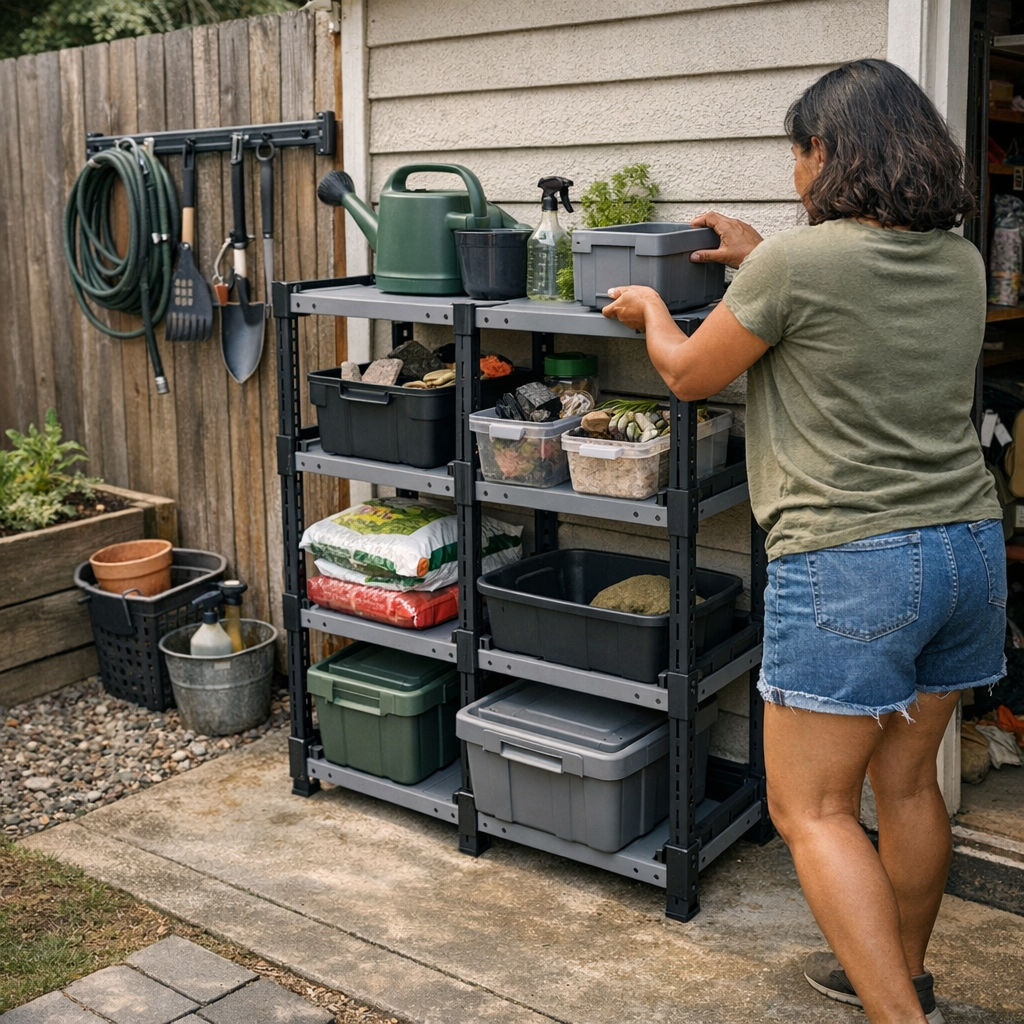
For a long time, I thought a yard would more or less keep itself organized, as long as I had a decent spot for everything. There’s a quiet comfort that comes with walking outside and seeing everything in its place—tools lined up, chairs stacked, the chaos contained. But it doesn’t take much for that order to start slipping, barely noticeable at first. After a few weekends, things begin to block the walkway, the “quick drop” pile becomes a fixture, and finding a trowel means digging through layers that shouldn’t be there.
Where Clutter Starts to Sneak In
You don’t notice it immediately. At first, it just feels like a busy weekend. Maybe a garden project runs long, or friends come over, and suddenly folding chairs are out, boards lean against the garage, and tools are left beside the hose. Somehow, everything feels one step harder to put away than the first time.
Over time, the yard becomes less guest-ready—not due to neglect, but from slow, persistent friction caused by everyday use. It’s not just about having enough bins or shelves. The real issue is how easy (or hard) it is to return things after using them. Sometimes what’s meant to be a solution just hides the mess instead of managing it.
When Storage Makes Things Harder
There was a stretch when I thought deeper bins and bigger sheds were the answer—I could fit so much more. But soon it became routine to rummage for garden gloves buried at the bottom or empty half a tote just to get the pruners. On the other hand, open racks keep every tool visible—until they’re so crammed that finding one means shuffling pieces like cards in a deck.
You feel it: the longer the reset takes, the more likely clutter creeps into the spaces you walk through daily. The “return flow”—the path things take to get back home—ends up mattering more than raw storage capacity. That’s the part I kept coming back to.
What Happens When Depth Disappears
Leaning into limits—that’s what actually worked. Swapping deep bins for wall racks no deeper than my forearm changed the whole rhythm. Without room to double-stack, tools had nowhere to hide. Piles stopped because there wasn’t enough space for them to form.
It’s almost counterintuitive, but keeping each storage zone shallow forces a kind of honesty. When something doesn’t fit, it’s obvious and immediate—maybe it means putting away a tool right then or finally discarding a broken sprayer. Either way, the reset no longer feels like a “later” chore. Most days, it’s a minute or two—enough to keep chaos from sticking around.
Living with a yard this way means even after a busy stretch, the mess can’t accumulate invisibly. Everything stays within sight, which quietly compels you to put it back where it belongs. Not every organization trick can promise that—just a few inches of shelf depth can change a surprising amount.
These quiet lessons circled back while working on a small project here: tidyyard.myshopify.com



