When Yard Storage Shapes Daily Flow and Peace
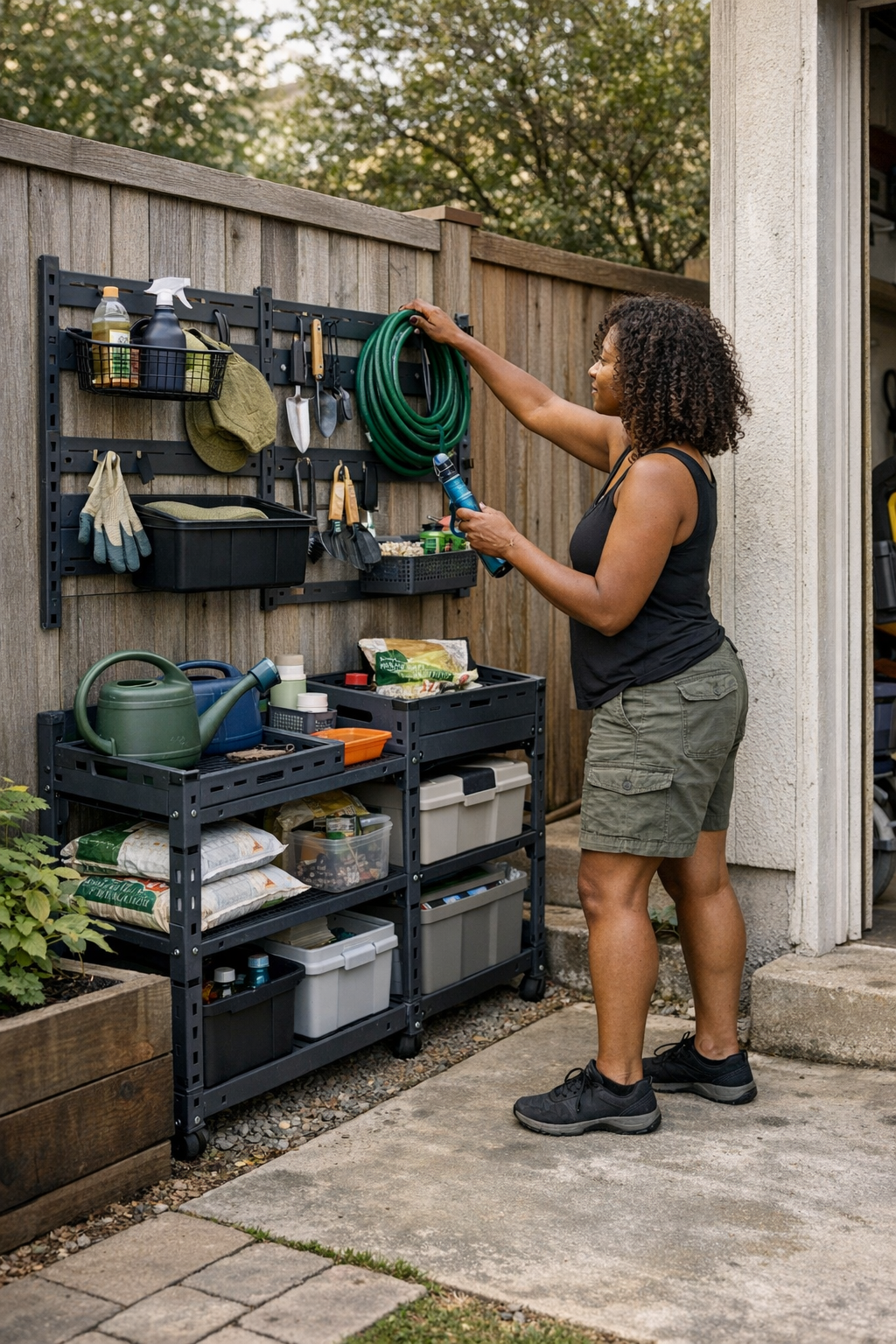
The most reliable yard storage setups create short, obvious return paths using zoning and reachable wall placement to reduce clutter.
There’s a certain heaviness to a small yard when storage isn’t quite right. Not a dramatic mess that hits all at once, but a slow creep—tools underfoot, a bike angled in front of a bench, bins pressed too close to where you walk. At first, it hardly registers. You return from errands, set things aside, move past them with a promise to tidy up soon.
But soon has a way of turning into never, and you start to feel it in the way you avoid certain corners or negotiate a narrow side path. The choices about storage reveal themselves not just in what fits, but in how you move through the space each day.
The Quiet Penalty of an Extra Step
You don’t always notice the resistance that builds when putting something away takes two hands or an awkward reach. The little delays gather—especially when storage means opening a heavy lid or detouring around floor bins. Every extra step becomes a negotiation with yourself, a subtle tax on your willingness to keep the place tidy.
I found myself avoiding the far end of our path where a storage chest lived. It had seemed like a clever hideaway—until using it meant dodging a basketball or fishing for a garden trowel buried beneath helmets. The more obstacles, the less likely things made it back. That was the part I kept coming back to.
When “Out of the Way” Blocks the Way
It’s easy to believe that pushing storage to the edges makes everything look neat. The opposite is often true, especially if high-use items are tucked far from reach. A walkway becomes a return lane, a recurring route for gear. When bins or benches force you to change course, it’s not just an inconvenience—it becomes a reason for clutter to linger.
Reaching for a wall-mounted rail, though, is different. The act is almost automatic: a sideways motion, a simple lift and drop. I noticed that returning things became part of the flow, so there was less of that gray area where gear just hovered, waiting to be put away “eventually.” You don’t feel the friction until it’s gone.
Small Shifts, Lasting Ease
It’s the kind of adjustment you barely think about until resetting the space no longer feels like a chore. Having essentials placed where your hand naturally goes—at hip or shoulder height—means less pausing, less reshuffling. Floor stays clear, the reset is quicker, and the path through the yard feels lighter with each pass.
The right storage doesn’t punish you for using your space. It quietly guides things back, leaving you room to breathe (and move) as life changes from one season to the next.
These quiet realizations followed me through weekends spent reworking a little side yard—if you’re curious, I kept notes here: http://www.tidyyard.myshopify.com