When Yard Storage Shapes Everyday Flow and Calm
Protecting the walkway means structuring storage with gaps to prevent buildup, reduce friction, and keep yard zones usable daily.
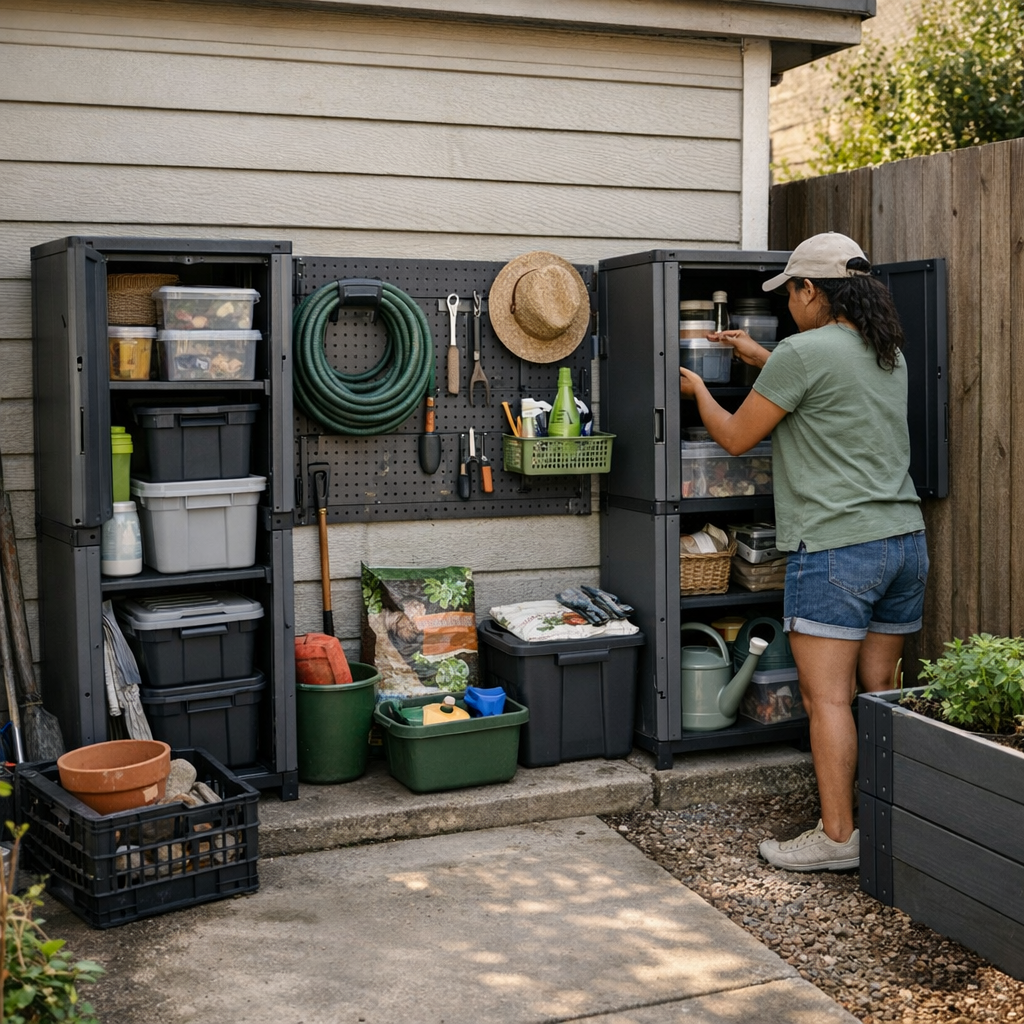
It sneaks up on you, this slow collapse of order in the yard. At first, a clear walkway feels achieved—tools and stray clutter tucked away, a path wide enough for the mower or a quick dash to the hose. But it doesn’t last as long as you hope. The edges of the yard start to crowd up, every return trip ending with equipment squeezed back wherever space appears. After a while, that initial clarity turns into a slow kind of gridlock.
You don’t notice it immediately.
But you feel it.
Edges Become New Obstacles
All the meticulous straight lines against the fence or garage—cabinets, racks, bins—should signal everything’s organized. The promise is that chaos is banished, hidden at last. Yet as days stretch on, the “effectiveness” of these lines fades.
What really happens is that tight, uninterrupted storage walls collect overflow until they can’t hold it anymore. I found myself spending more time shifting things just to get at one small tool, each retrieval leaving the space more jumbled than before. The walkway might stay open, technically, but instead of smooth access, frustration just builds at the margins.
A Subtle Shift Makes a Difference
It took me a few stubborn rounds of rearranging before I broke up my own great wall of storage. The change was small, almost undramatic: two cabinets, side by side but separated by a shelf’s width of daylight. The effect, though, was immediate. That simple gap gave loose bags and stray gear a place to land, away from the core storage itself.
For the first time, I wasn’t stacking or unstacking bins in an endless cycle. If something overflowed, I saw it. There was no need to dig through layers to reach what was needed. Resetting things after a busy weekend was less of a chore, almost just another step as I headed inside. That was the part I kept coming back to.
Movement Finds Its Way Back
It turns out keeping a space useful isn’t about defending the walkway with military precision. It’s about letting your storage breathe—leaving room for mess to collect in plain sight, not in sneaky, compressing piles behind closed lids. When the only concern is keeping things neat after a big reset, daily use wears down the system fast.
I noticed that once there was a pressure valve—a deliberate break between storage zones—there was less tension in how the space worked, fewer small negotiations with myself over where to put or find something. The yard returned to feeling adaptable instead of just temporarily organized. Even the everyday movements, fetching or putting away, slowed down enough to notice the difference.
It’s not always obvious until you live with it for a while.
These thoughts first came up during a few restless afternoons, and I sometimes look back at what changed here: http://www.tidyyard.myshopify.com



