When Yard Storage Stops Getting in the Way of Life
If outdoor storage blocks paths or delays clean-up, the yard shrinks. A modular wall system restores space and eases daily resets.
There’s a quiet moment, usually after the third or fourth attempt to clear a walkway, when the shape of your outdoor storage becomes more obvious than any plant, chair, or patch of grass. At first, the new bin or shed feels like a win—crisp and promising—but within days, it starts setting the terms for how you move, where you stand, and whether you’ll finish a chore without muttering under your breath.
You don’t notice it right away.
But you feel it. In a small yard, where every meter counts, the wrong storage makes itself known with every side-step and every tool left out. It’s not just about stowing things away; it’s about living in the yard—day after day—without losing precious ground to clutter or the frustration of blocked paths.
The Promise of Storage, and Where It Cracks
At first, big storage looks like the perfect answer. Those catalog shots show deck boxes gleaming under the sun, promising to hold everything. There’s a strange relief when it arrives, as if now your yard will finally stay tidy.
That relief doesn’t last. What catalogs rarely show: you sidestepping around a box that has encroached exactly where you’d stand to water the garden, or a cabinet sitting like a wall across your only clear path to the gate. Those hopeful first days slowly give way to obstacles.
There’s a hidden, everyday cost in wasted movement, in the slow pile-up of items that never make it back to their home because the home itself is hard to reach.
Modularity Quietly Shifts the Whole Routine
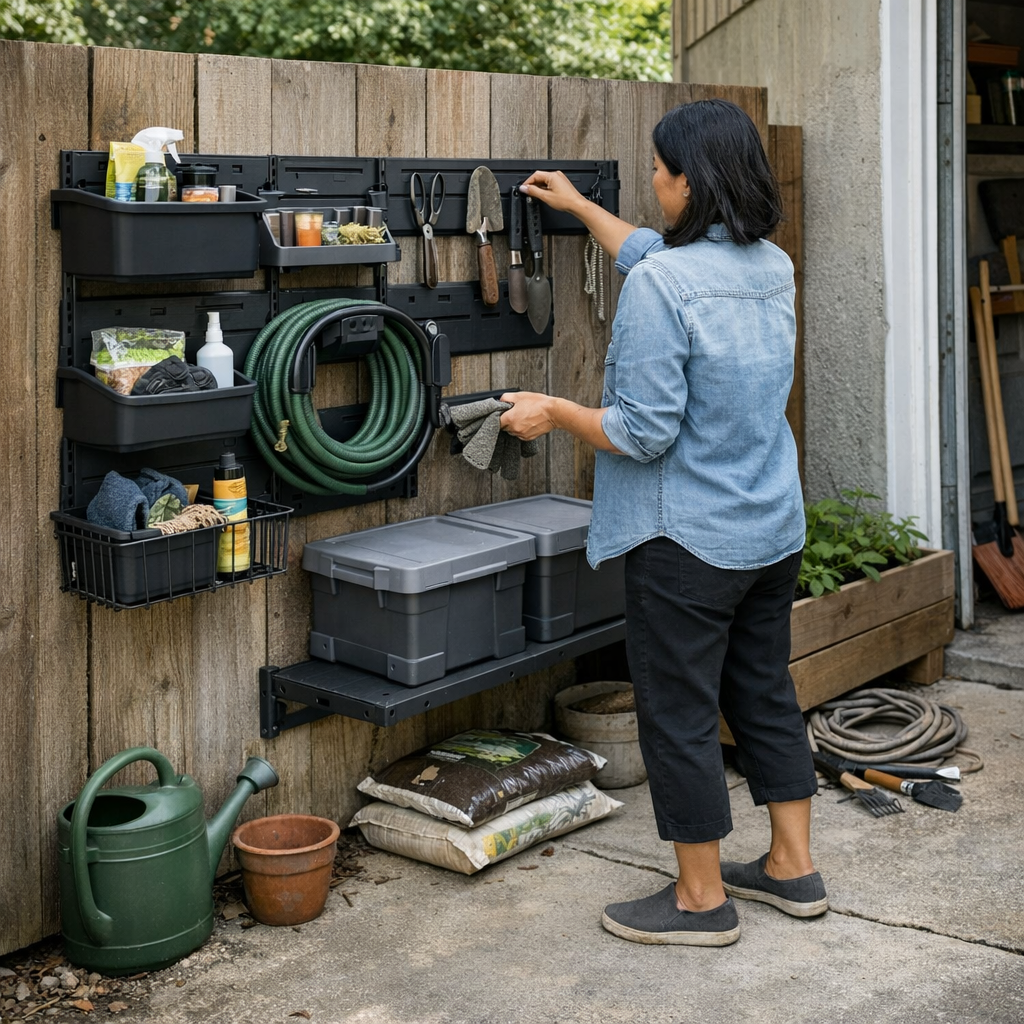
The biggest change came on a random afternoon when the old deck bin went out. It was replaced by a small stretch of wall-mounted hooks and rails—nothing fancy—just high enough to hang tools and toys above the walkway.
The effect was subtle but clear. Suddenly there was space for feet, space for kids rushing through, and the quiet rhythm of putting things away without shuffling around obstacles. The yard felt open, even if the footprint hadn’t changed. Items were kept at hand height, never on the floor, and the daily reset—the cleanup at dusk—became one smooth walk, not a puzzle.
This was the part I kept coming back to: making storage adapt to routines, not routines adapt to storage. This freed up more than just floor space. It made it feel possible to use the yard for more than just storage.
The Real Test Comes After the Weekend
It’s in the overlapping moments—a muddy soccer ball, gardening gloves, folding chairs left out for a neighbor’s visit—that storage really reveals itself. Even a generous fixed cabinet creates a bottleneck: reach, block, move, replace.
A small yard never stays still. Some days it’s a play zone, other days it’s a project area, and sometimes it’s just a passage. Storage that runs quietly along walls, flexible and adaptable, keeps up with all that, allowing things to move without friction. The right system blends into the background, silent, but you notice immediately when it’s missing.
If you find yourself moving the same box just to open a gate, or stacking tools for the second time in an hour, it’s a clear sign something needs to change.
These realizations came together while I was sorting out my own tight and untidy patch of ground. View the full collection