When Your Garage Storage Stops Adapting to Life
Fixed storage looks organized but fails to adapt, causing overflow; modular setups allow reconfiguration, keeping spaces clear and practical.
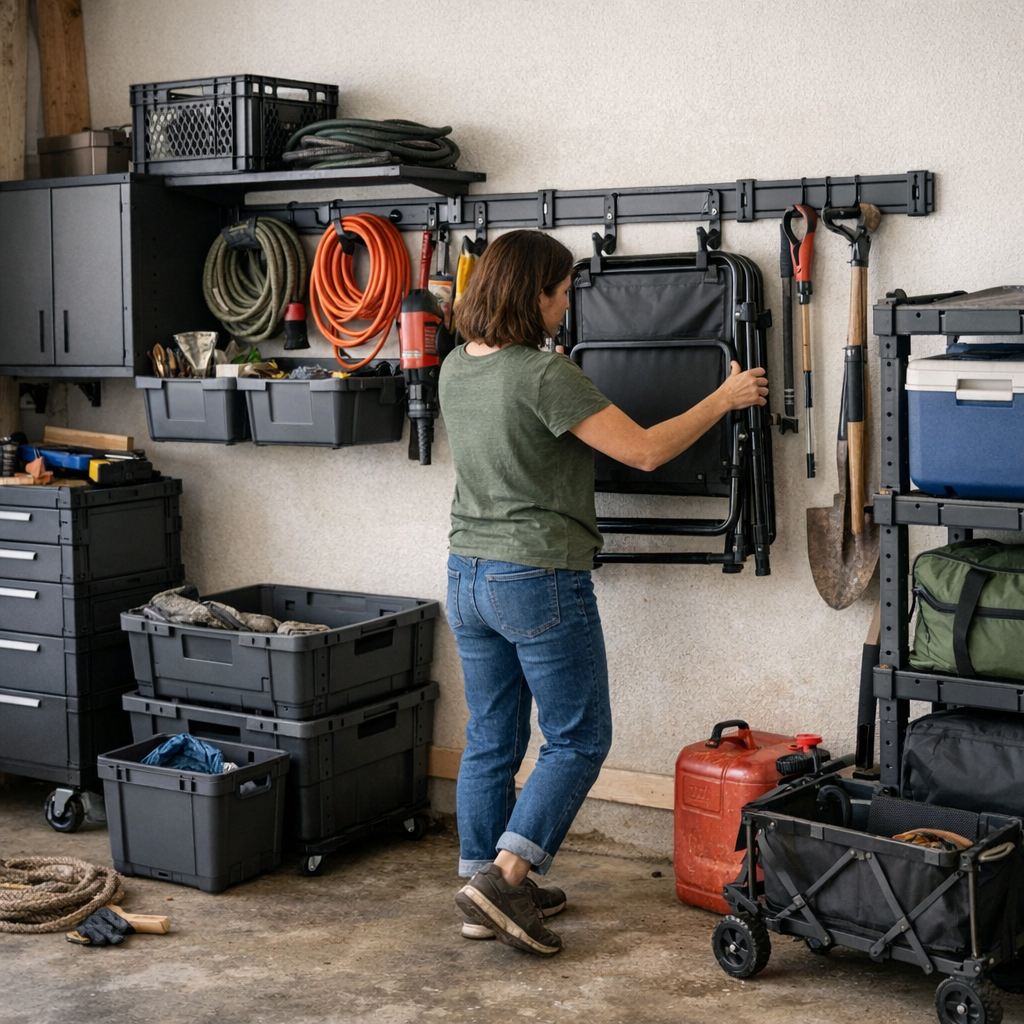
It’s easy to take order for granted—until you find yourself tripping over a folding table or struggling to reach a tool stuck behind a wall of bins. In those moments, the limits of your storage choices become clear. The surface looks neat, but the flow of using the space stutters; something’s off in how your workspace functions day-to-day.
In garages and workshops, modular solutions often promise calm or control. But when life’s cycles shift—a new project begins, the seasons change, or an unusual garden tool arrives—the efficiency of fixed wall mounts or cabinets starts to break down. Storage rarely stays static, even when we hope it would.
When Order Becomes Obstinate
You don’t notice the problem right away.
At first, your grid of hooks and stack of bins keeps everything in place. Brooms rest beside extension cords, gloves sit quietly in their labeled cubby, and the floor stays clear with a satisfying sense of order.
But as weeks pass, the pattern breaks. A bulky ladder needs space—so two bins come down to fit it. Patio chairs return from the yard, larger than expected, crowding the once-perfect layout. Each new return or addition forces a reshuffling. Overflow creeps onto corners, edges of the workbench, or the floor just inside the door.
You feel these slow, creeping disruptions every time you move through the space.
Flexibility Shows in Small Moments
These frustrations aren’t dramatic but quietly tell a story—glancing at a blocked row, a sigh before sorting once more. Fixed storage resists change and forces compromises in daily use.
Not long ago, I replaced part of an immovable wall panel with a simple modular rail. The difference wasn’t just visual. When a surprise extra table or seasonal tool appeared, I could slide a hook a few inches, shift a bin, and open space without tearing down the whole setup. Movement got easier. Bringing gear back stopped feeling like a small puzzle.
It’s not about making everything perfect. It’s about avoiding a full reset every time your storage needs shift.
A Space That Breathes With You
Over time, storage that adapts quietly changes the flow of your workspace. Instead of detours and blockages, there’s gentle give—and a real sense of possibility. This flexibility matters most in small workshops or crowded garages, where every inch counts and no layout stays permanent for long.
Modular systems that absorb new gear prevent overflow from piling up on the floor or in forgotten corners. The space—and your movement through it—stays open. There’s relief in not having to negotiate with your own storage, in letting the area work with you, not against you.
It’s this difference—between a room that stands still and one that adapts—that remains most memorable.
These thoughts came together while reorganizing my own crowded garage one late afternoon.



