When Your Trunk Finally Keeps Up With Everyday Chaos
A trunk that adapts to shifting cargo and secures essentials saves time and hassle, keeping items organized during repeated errands.
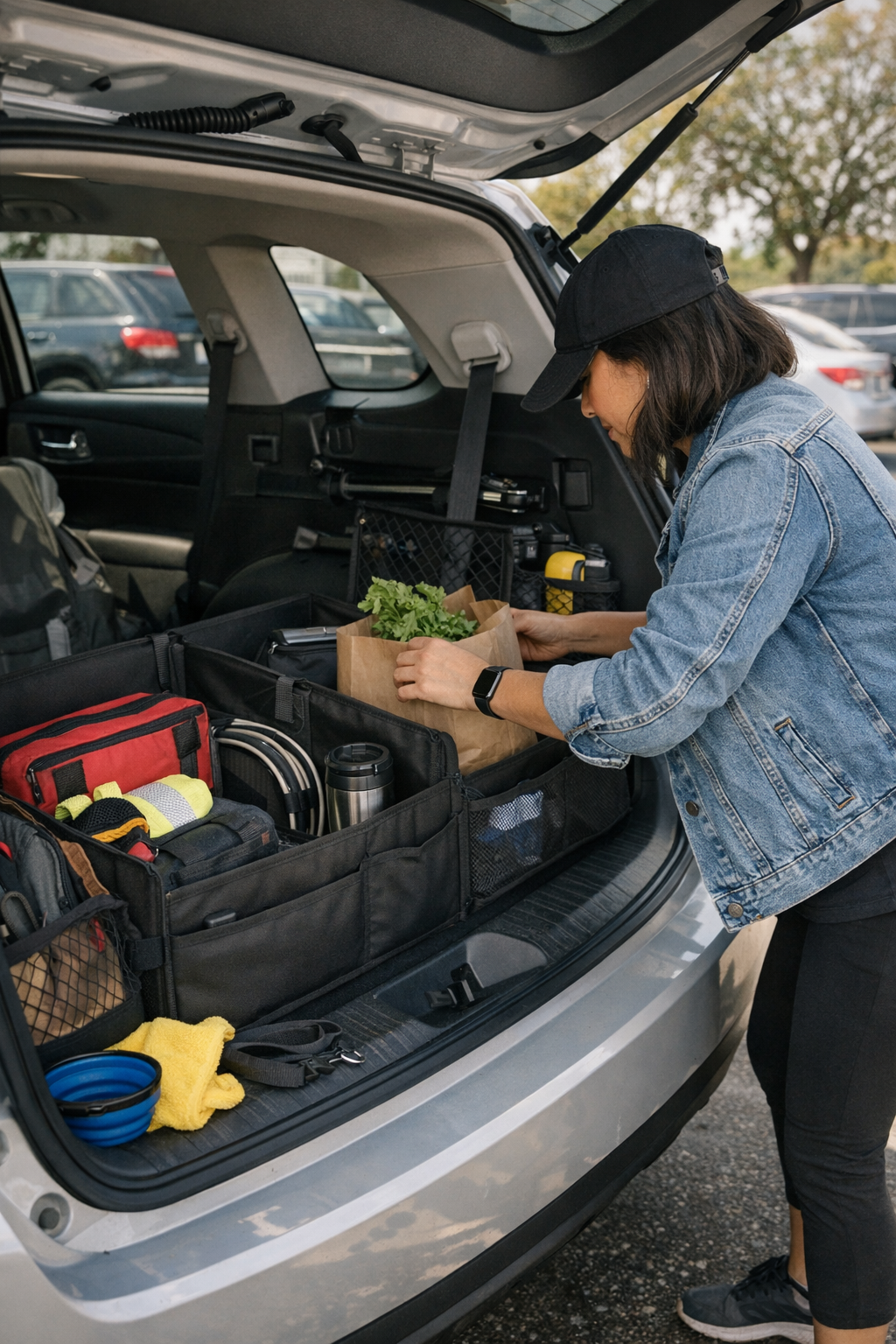
You notice it after a week or so—the feeling that your trunk, once neatly organized, has quietly started working against you. On day one, everything fits in its place. Then errands build up, bags shift, cables slip from where you left them, and what was once a smooth loading routine slows down in subtle ways. It’s not a sudden mess, just a growing friction, like a familiar shortcut that stops saving time. That’s what kept bothering me each time I returned to the car.
What Slips, Shifts
At first, it looked fine: boxes stacked, cables rolled, shoes tucked to the side, charger within easy reach. But after a few drives—especially short runs back-to-back—the setup melted into something a bit chaotic. A sharp corner or quick stop sent bags sliding at an angle. Kits ended up wedged deep and out of reach. Cables got buried under stroller wheels or twisted around handles.
You only realize the problem when you repeatedly reach for something—then pause, shuffle items, or untangle cords—after running the same errands multiple times. The static order on day one just doesn’t hold up. And it’s most obvious after three stops, when half the trunk seems rearranged by the drive itself.
The Structure That Lasts
After a few months, small changes made a difference. I swapped loose bins for a divided, anchored organizer and adjusted a divider to line up with the rear wheel arch. Bags stayed in their lanes. Cables weren’t smothered every time I grabbed groceries.
Adding an anchored section near the door just for quick-access gear meant no more digging for essentials in the dark or untangling cords twisted around handles. There was less mess to fix, mostly just opening the trunk and finding everything where it belonged. Nothing fancy—just enough separation to keep the system intact through bumpy stops without falling apart.
When Return Means Reset
The clearest sign it worked: I no longer had to redo the entire setup after every drive. Clutter didn’t sneak back with each return; cleanup became irregular, almost background noise. Sure, there’s still the occasional bag that refuses to stay put, but daily life stopped feeling like constant adjustments.
The difference is subtle but real—things stay in place. That’s what I wanted more than the pristine day-one neatness. The right trunk setup shows its value not when it’s empty, but when you come back and everything’s ready to go, again and again.
If you’re curious, here’s where I found a few things that helped.



